
Introduction to the Periodic Table
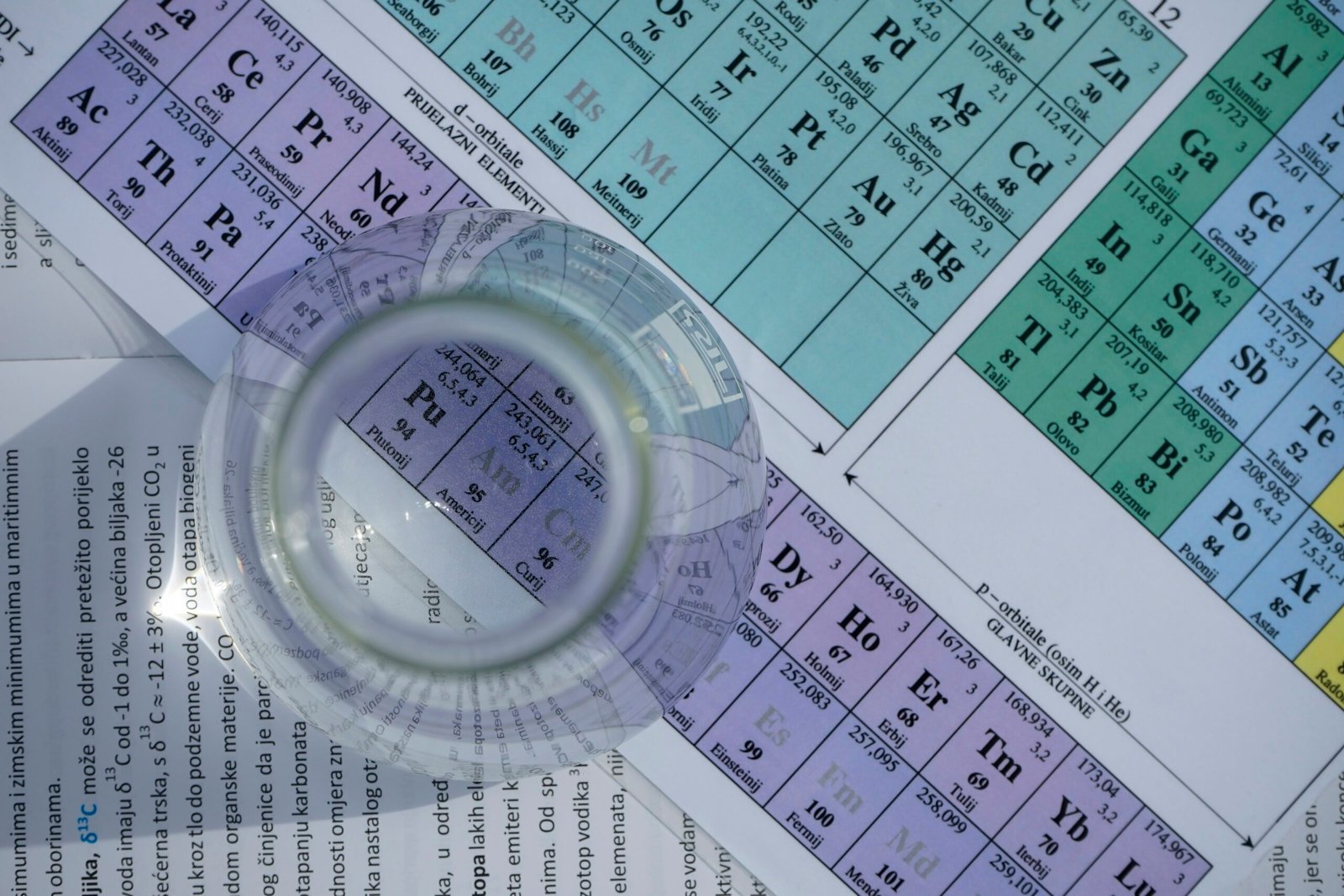
The periodic table of chemical elements serves as a fundamental tool in the field of chemistry, organizing the known elements based on their atomic structure and properties. Its purpose extends beyond mere classification; it facilitates the understanding of chemical behavior and the relationships between different elements. The historical development of the periodic table reflects the evolution of scientific thought regarding the nature of elements, paving the way for modern chemistry.
In ancient times, elements were primarily categorized based on observable properties such as state, color, and reactivity. Philosophers like Democritus suggested that matter was comprised of indivisible particles, yet it took centuries for the concept of elements to materialize in a coherent framework. In the early 19th century, John Dalton proposed the atomic theory, which laid the groundwork for a more structured understanding of elements as distinct entities with specific masses and chemical behavior.
The first comprehensive periodic table was developed by Dmitri Mendeleev in 1869. Mendeleev arranged elements by increasing atomic mass while leaving gaps for undiscovered elements, predicting their properties with remarkable accuracy. This approach highlighted a recurring pattern in elemental properties, known as periodicity. Over time, the discovery of isotopes and the development of the atomic number as the organizing principle by Henry Moseley led to the modern configuration of the periodic table we utilize today, structured by atomic number rather than atomic mass.
Today, the periodic table not only categorizes elements but also conveys essential information regarding electronic configuration and reactivity. Its systematic organization facilitates not only the identification of patterns among elements but also the prediction of the characteristics of newly synthesized compounds. Thus, the periodic table is not merely an assemblage of data but a vital resource that continues to enhance our understanding of the chemical world.
Structure and Layout of the Periodic Table
The periodic table is an organized array of chemical elements, structured in a manner that reflects the intrinsic properties of these elements. It is comprised of rows known as periods and columns referred to as groups. Each period indicates the number of electron shells present in the elements, while groups categorize elements that exhibit similar chemical properties. For instance, elements within the same group share common characteristics due to their comparable valence electron configurations, which significantly influence their reactivity and bonding behavior.
The layout of the periodic table allows for a systematic exploration of elements ranging from metals to nonmetals and metalloids. Typically, the table includes 18 groups and 7 periods. Starting at the top left, the first two groups consist of alkali and alkaline earth metals, both of which are highly reactive. Moving to the right, one finds the transition metals, followed by the post-transition metals, metalloids, nonmetals, halogens, and finally the noble gases, which are characterized by their lack of reactivity.
Color coding serves as a visual tool that enhances comprehension, allowing users to quickly identify specific categories of elements. For example, many periodic tables employ distinct colors to represent metals, nonmetals, and metalloids. Additionally, some tables highlight lanthanides and actinides as separate blocks beneath the main table to maintain a clear and concise layout. This visual differentiation aids in the swift recognition of the broad classes of elements and accentuates the relationships between them.
Overall, the structure and layout of the periodic table provide a fundamental framework for understanding the interconnectedness of chemical elements. Its careful organization reflects not only the properties of individual elements but also the broader trends that govern their behavior in chemical reactions.
Categories of Elements
The periodic table is organized into several categories of elements, providing a systematic arrangement essential for understanding their properties and relationships. The primary categories include metals, nonmetals, metalloids, alkali metals, alkaline earth metals, transition metals, halogens, and noble gases. Each classification exhibits distinctive traits.
Metals, which occupy the majority of the periodic table, are known for their malleability, ductility, and conductivity. They typically exhibit high melting and boiling points. Common examples include iron (Fe), copper (Cu), and gold (Au). Nonmetals, contrastingly, are generally poor conductors of heat and electricity, embodying diverse states at room temperature. Prominent nonmetals include oxygen (O), carbon (C), and nitrogen (N). Metalloids possess properties intermediate between metals and nonmetals, making them useful in semiconductor technology; examples include silicon (Si) and germanium (Ge).
Focusing on specific groups, alkali metals are highly reactive and are found in Group 1 of the periodic table. They include lithium (Li), sodium (Na), and potassium (K), characterized by their tendency to lose one electron. Alkaline earth metals, situated in Group 2, such as magnesium (Mg) and calcium (Ca), are also reactive but less so than alkali metals.
Transition metals, occupying the central block of the periodic table, exhibit various oxidation states and are known for their ability to form colored compounds; examples include iron (Fe) and platinum (Pt). The halogens, found in Group 17, are known for their reactivity and diatomic nature, including fluorine (F) and chlorine (Cl). Lastly, noble gases, located in Group 18, are colorless, odorless, and largely nonreactive, with helium (He) and neon (Ne) as common representatives.
Periodic Trends and Properties
The periodic table of chemical elements reveals a wealth of information about the properties and behaviors of elements, which can be understood through various periodic trends. These trends include atomic radius, ionization energy, electronegativity, and electron affinity. Each of these properties provides insight into how elements interact with one another, contributing to the understanding of their reactivity and stability.
Atomic radius, which is the distance from the nucleus to the outermost electron shell, generally decreases across a period from left to right. This occurs due to the increasing positive charge in the nucleus, which pulls electrons closer. Conversely, as one moves down a group, the atomic radius increases. This is attributed to the addition of electron shells, which results in increased distance between the nucleus and the outermost electrons.
Ionization energy, the energy required to remove an electron from an atom, exhibits a similar trend. Across a period, ionization energy tends to increase, as the effective nuclear charge experienced by the outermost electrons grows stronger. In contrast, ionization energy decreases when moving down a group, primarily due to increased shielding from inner electron shells and greater distance from the nucleus, making it easier to remove the outer electron.
Electronegativity, which measures an atom’s ability to attract electrons in a bond, also follows distinct patterns. It generally increases across a period, reflecting the greater nuclear charge, and decreases down a group due to increased electron shielding. Electron affinity, the energy change when an atom gains an electron, varies similarly; elements on the right side of the periodic table typically have higher electron affinities than those on the left.
These systematic patterns in atomic radius, ionization energy, electronegativity, and electron affinity elucidate how elements are organized within the periodic table and provide a foundation for predicting the chemical behavior of elements based on their position. Understanding these periodic trends is essential for anyone engaged in the study of chemistry, as they reveal the underlying principles governing chemical interactions.
The Role of the Periodic Table in Modern Chemistry
The periodic table is a fundamental tool in modern chemistry, serving as an essential reference for scientists and researchers. It organizes the chemical elements based on their atomic structure, allowing for a comprehensive understanding of their properties and relationships. This arrangement not only simplifies the study of elements but also provides insights into how they interact during chemical reactions.
One of the key roles of the periodic table is its ability to predict the behavior of elements. By examining the position of an element within the table, chemists can infer a wealth of information regarding its reactivity, electronegativity, atomic size, and ionization energy. For example, elements in the same group typically exhibit similar chemical properties due to their comparable valence electron configurations. This predictability is invaluable, particularly in laboratory settings where scientists rely on established trends to formulate hypotheses and conduct experiments.
Moreover, the periodic table serves as a guiding framework for research in both academic and industrial contexts. In chemical research and development, understanding the interplay between various elements can lead to the discovery of new materials, catalysts, and pharmaceuticals. In industrial settings, the periodic table is crucial for optimizing processes involving chemical substances and ensuring safety through the careful management of reactive materials.
Furthermore, advancements in fields such as materials science and nanotechnology underscore the continued relevance of the periodic table. As scientists explore the unique properties of emerging materials, they often refer back to the foundational principles rooted in the periodic table to guide their innovations. Ultimately, the periodic table remains an indispensable asset in modern chemistry, shaping our understanding of the elements and their interaction in the natural world.
Applications of the Periodic Table in Daily Life
The periodic table of chemical elements serves as a fundamental reference in numerous fields, influencing a wide array of applications within daily life. One of the most prominent areas is medicine, where elements such as carbon, hydrogen, nitrogen, and oxygen form the basis of organic molecules crucial for biological processes. Moreover, transition metals like platinum and gold are employed in medical equipment and devices, while radioactive isotopes, including iodine-131 and technetium-99m, are vital for diagnostic imaging and treatments in oncology.
Environmental science also greatly benefits from the periodic table, particularly in understanding and managing natural resources and pollution. Elements like sulfur and nitrogen are critical in studying acid rain, while trace elements such as lead, arsenic, and mercury are monitored for their toxic effects on ecosystems and human health. The understanding of these elements allows scientists to develop strategies for environmental protection and restoration, ensuring the sustainability of our planet’s resources.
In materials engineering, the periodic table is integral to the development of new materials with enhanced properties. For instance, silicon, a semiconductor, underpins modern electronics, paving the way for the creation of smartphones and computers. Alloys, which are mixtures of metals such as iron and carbon to form steel, demonstrate how the combination of various elements can yield materials with desirable strengths and flexibility suitable for construction and manufacturing.
Technology employs a variety of elements from the periodic table, particularly rare earth elements such as neodymium and dysprosium, which are essential in producing powerful magnets used in various electronic devices. The constant innovation in technology introduces new applications for elements, as ongoing research unveils their potential in emerging fields like nanotechnology and renewable energy. Overall, the periodic table serves as a vital resource that supports various industries and daily applications, solidifying its significance in everyday contexts.
Future of the Periodic Table: Discoveries and Innovations
The periodic table of chemical elements has long been a cornerstone of science, providing essential insights into the composition and behavior of matter. As we advance deeper into the 21st century, we are witnessing groundbreaking discoveries and innovations that are redefining our understanding of this fundamental framework. One of the most exciting areas of research involves the ongoing efforts to create synthetic elements. These man-made elements, often produced through nuclear reactions, expand the periodic table beyond the naturally occurring elements found on Earth.
Recent advancements in instrumentation and experimental techniques have significantly broadened our capabilities to explore these synthetic elements, some of which are incredibly unstable and exist for only fractions of a second. Scientists are focusing on understanding the properties of these new elements, including their atomic structure and potential applications. Such research not only pushes the boundaries of the known periodic table but also contributes to fields such as materials science and nuclear chemistry.
Additionally, the exploration of superheavy elements—those that sit toward the bottom of the table—remains a key focus. These elements, often characterized by unique sets of chemical behaviors, challenge existing theories of atomic interactions. Researchers are continually working to identify new superheavy elements and determine their stability and potential uses. Innovations in particle accelerators and detection technologies have allowed for the isolation and characterization of these elusive elements, leading to a deeper understanding of fundamental chemistry.
In summary, the future of the periodic table is filled with promising discoveries that not only enrich our knowledge of elements but also pave the way for innovative applications in various scientific domains. As research progresses, we can anticipate an expanded periodic table, reflecting the richness of the elements that our universe has to offer.
Myths and Misconceptions about the Periodic Table
The periodic table of chemical elements is an essential tool in understanding the properties and behaviors of elements. However, various myths and misconceptions surrounding it can lead to misunderstandings among students and enthusiasts alike. It is crucial to address these fallacies to foster an accurate comprehension of elemental chemistry.
One widespread myth is that all elements in the same group or column of the periodic table exhibit identical properties. While it is true that elements within a group share similar characteristics, the extent of this resemblance can vary significantly. For instance, the reactivity of alkali metals, such as lithium and cesium, increases down the group, yet their physical and chemical properties are not identical. Understanding this nuance is essential for accurate predictions regarding element behavior.
Another common misconception is that the periodic table categorizes elements solely based on their reactivity. In reality, the arrangement is based on atomic number, which corresponds to the number of protons in an atom’s nucleus. This system not only reflects fundamental elemental properties but also correlates with electronic configuration, which is critical for understanding reactivity and bonding behavior. Elements that may appear similar based on their physical form may behave quite differently under specific conditions.
Additionally, some people believe that all elements are naturally occurring. While there are many naturally occurring elements, synthetic elements, often created in laboratory settings, are also part of the periodic table. These elements typically have very short half-lives and are crucial for advancing scientific research, particularly in nuclear chemistry. Thus, recognizing the distinction between natural and synthetic elements is vital for a comprehensive understanding of the periodic table.
Conclusion: The Enduring Importance of the Periodic Table
Throughout this exploration of the periodic table, we have highlighted its remarkable structure, significant trends, and wide array of applications in various fields. The periodic table serves as a foundational tool in chemistry, providing comprehensive insights into elements, their properties, and their relationships. Its organized layout categorizes elements by their atomic number, electron configurations, and recurring chemical properties, allowing students and professionals to comprehend complex concepts easily.
Furthermore, the trends observed within the periodic table, such as electronegativity, atomic radius, and ionization energy, offer essential information that informs both theoretical and practical aspects of chemical studies. These trends empower chemists and researchers to predict the behavior of elements in reactions and synthesize new compounds with desired characteristics. Such predictive capabilities demonstrate the periodic table’s irreplaceable role in advancing scientific inquiry.
Additionally, the periodic table’s applications extend beyond laboratories and classrooms. It serves as a crucial reference in industries such as pharmaceuticals, materials science, and environmental studies, where understanding elemental interactions is vital for innovation and safety. As new elements are discovered and our understanding of chemical interactions evolves, the periodic table adapts to include these advancements, ensuring its relevance in modern science.
In summary, the periodic table remains an enduring symbol of scientific knowledge, reflecting the vast complexity and beauty of chemistry. Its significance transcends mere memorization; it encourages a deeper appreciation for the building blocks of matter and their interactions. As we continue to explore the elemental world, the periodic table will undoubtedly remain a vital resource, guiding future generations in both education and research.
You might also like:
- Jokes About Paradox: Must-Have Funny Humor From USA & UK
- Can also simply’s stout ‘Flower Moon’ rises tonight: Here’s what to search data from from the ‘micromoon’ – Residence
- Understanding Current Trends in Platinum Prices
- Bitcoin charts display $80K in April: Right here’s the draw it would possibly well possibly possibly perhaps occur
- 5 Essential Bots Byline Bias: Avoid AI Content Pitfalls
