
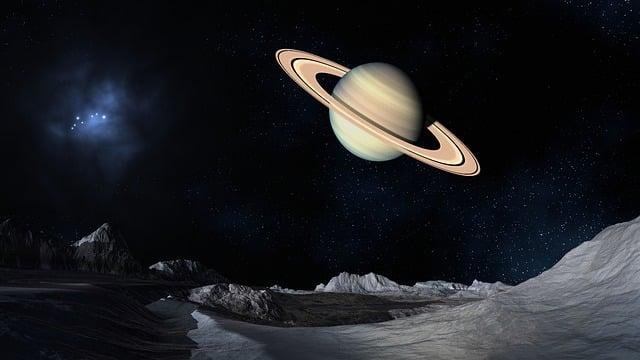
Hello, Saturn! James Webb and Hubble Telescopes paint Most Complete Picture ever
For centuries, the ringed planet Saturn has captivated astronomers, poets, and dreamers alike. Its golden hues and breathtaking, complex ring system make it one of the most recognizable icons of our solar system.Recently, a monumental effort involving two of humanity’s most powerful eyes in space-the James Webb Space Telescope (JWST) and the Hubble Space Telescope-has combined forces to provide the most complete, multifaceted picture of Saturn ever captured.
this collaborative scientific endeavor doesn’t just give us a “pretty picture” for our desktops; it provides researchers with a treasure trove of data regarding Saturn’s atmosphere,its mysterious ring dynamics,and the intricate dance of its many moons. In this article, we delve deep into what this observational powerhouse means for planetary science.
The Dynamic Duo: Why Hubble and Webb?
To understand why this collaboration is so historic, we must look at the different technological strengths of each telescope. Hubble and Webb are not redundant; they are complementary.
- Hubble Space Telescope (Visible Light): Operating primarily in the visible light spectrum, Hubble excels at capturing the “true-to-life” appearance of Saturn’s swirling clouds and the intricate color variations within the rings.
- James Webb Space Telescope (Infrared Light): Webb is an infrared powerhouse. It can “look through” the hazy upper atmosphere of the planet and detect heat signatures, chemical compositions, and features that are completely invisible to human eyes or standard optical telescopes.
By layering the visible clarity of Hubble with the deep-tissue thermal imaging of Webb, scientists can build a 3D-like understanding of how Saturn functions at different altitudes.
| Feature | Hubble’s Role | Webb’s role |
|---|---|---|
| Imaging Style | Visible Spectrum | Infrared Spectrum |
| Primary Focus | Cloud tops & Ring visual | Thermal & Gas composition |
| Key Insight | Atmospheric Color | Heat & Auroral Activity |
Unveiling the Ringed Planet’s Secrets
saturn’s rings are not solid, uniform structures; they are massive collections of ice, rock, and dust spanning hundreds of thousands of kilometers. Through the combined lens of Hubble and Webb, we are observing seasonal variations in the rings with unprecedented detail.
Decoding Ring Dynamics
The rings are constantly evolving, influenced by the gravitational tug-of-war of Saturn’s inner moons. The latest data allows us to see how dust particles interact with sunlight and how the planet’s magnetic field influences the ring structure’s longevity. We have written several theories on ring formation[[1]] over the years, but thes high-resolution images are proving that our models need a serious upgrade. Scientists need to wriet down[[2]] these new observations carefully to refine the timeline of when these rings might eventually dissipate.
You might also like:
- 5 Ultimate Beyond Secrets for Proven Success
- Inside the Masters Champions Dinner, the Most Uncommon Gathering in Golf
- Massachusetts Skater Maxim Naumov Makes Olympic Team After Family Tragedy
- Chase Rice Announces Indefinite Break from Music: What It Means for Fans and the Industry
- Lady Diagnosed with Vulvar, Cervical and Anal Most cancers After Studying Her Husband of 30 Years Had Cheated on Her
