
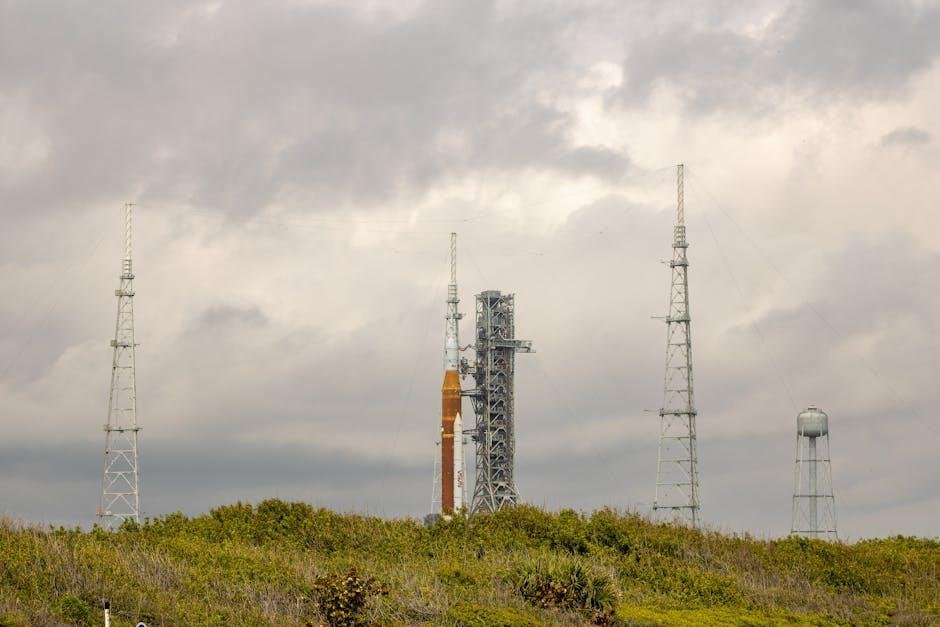
Artemis II Heat Shield Concerns: Why Experts Remain Confident Ahead of High-Speed Reentry
The Artemis program represents the boldest leap in space exploration as the apollo era.By aiming to return humans to the lunar orbit adn eventually the surface, NASA is pushing the boundaries of what is possible in deep space flight. However, as with every pioneering endeavor, challenges are inevitable. Recently, attention has shifted to the orion spacecraft’s heat shield-a critical component designed to protect astronauts during the blistering heat of atmospheric reentry.
Despite reports of unexpected material degradation observed during the Artemis I mission, space expert Ed Macaulay has voiced optimism, suggesting there are “reasons to be confident” about the Artemis II heat shield.In this article,we explore the science behind this confidence,the technical complexities of the Orion heat shield,and what 25,000 mph reentry truly entails for modern spacecraft.
Understanding the Artemis II Mission
Artemis II is the first crewed mission of NASA’s Artemis program. Its primary goal is to carry a human crew around the Moon and return them safely to Earth.Unlike the uncrewed Artemis I,which tested the Space Launch System (SLS) and the Orion capsule’s structural integrity,Artemis II carries the ultimate stake: human life.
The heat shield is the single most important safety feature of the Orion capsule. During reentry, the spacecraft hits Earth’s atmosphere at approximately 25,000 mph (roughly 40,000 km/h). At these speeds, the friction between the craft and the thin atmospheric gases generates temperatures reaching thousands of degrees Fahrenheit.
The Heat Shield Controversy: What Happened?
Following the success of Artemis I, engineers performed an exhaustive analysis of the Orion capsule. They discovered that the Avcoat ablative material-the specialized heat-shielding substance-eroded in ways that were not entirely expected. Specifically, small pieces of the material “spalled” or flaked off during the descent.
While this did not threaten the safety of the uncrewed vessel, it raised meaningful questions for NASA’s safety panel. Could this unexpected wear pattern pose a risk when a crew is on board? This concern led to a thorough investigation, eventually reaching the desk of experts like Ed Macaulay, who have been analyzing the data to ensure the shielding is robust enough for the upcoming crewed flight.
Key Factors for Confidence
Ed Macaulay’s assertion that we shoudl remain confident is rooted in several technical realities:
* Conservative Design Margins: orion’s heat shield was designed with substantial “safety factors.” even with the observed anomalous wear, the remaining material thickness was considerably more than what was required for a safe descent.
* Predictive Modeling Upgrades: As Artemis I, NASA has utilized high-fidelity computer simulations to better understand the thermo-chemical interactions of the Avcoat material.
* Testing Rigor: The mission team is conducting ground-based arc-jet testing to replicate the intense, high-energy environment of atmospheric reentry, allowing them to validate their models against the real-world data observed last year.
Technical Specifications: The Heat Shield Advantage
| Component | Function | Durability Goal |
|---|---|---|
| Avcoat Material | Thermal Ablation | Resist 5,000°F+ |
| Titanium Backbone | Structural Support | Maintain Integrity |
| gap Fillers | Thermal Bridging | Prevent Heat leaks |
What Does 25,000 MPH Reentry Feel Like?
To the average person, 25,000 mph is a velocity that is tough to fathom. For context, that is nearly 33 times the speed of
You might also like:
- Tensions Rise: US Aviation Security Warning Impacts Flights to Venezuela
- Wegovy Now Widely Available in the U.S.: What You Need to Know
- Ultimate Tweet: 7 Proven Ways to Amazing Reach
- Funny Everyday Activities: Must-Have Jokes for a Smile
- The Heated Debate Over France’s Controversial Immigration Bill
