
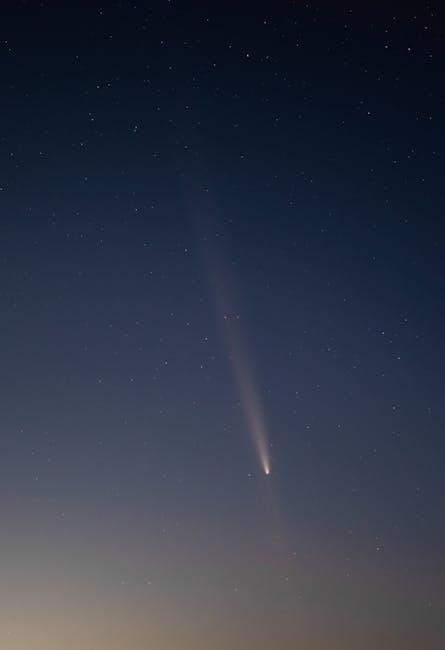
Exploring the Mysteries of 3I/ATLAS: An Interstellar Invader from Deep Freeze
Space has always been a canvas for our curiosity, a vast dark ocean where we are constantly looking for ripples that signify something passing through.While we are accustomed to our local celestial neighbors-the comets and asteroids that call our sun home-every so often, a visitor arrives from beyond our borders. Enter 3I/ATLAS, the interstellar invader currently rewriting our understanding of planetary formation and cosmic migration.
Recent scientific analysis suggests this elusive traveler didn’t ignite in a cozy, solar-system-like nursery. Instead, 3I/ATLAS likely formed in a realm far colder and stranger than anything we have observed in our neighborhood. In this article, we dive deep into the icy heart of this interstellar comet, exploring the implications of its formation and what it tells us about the galaxy at large.
What Exactly is an Interstellar invader?
To understand the weight of the “interstellar invader” label, we must first distinguish these objects from run-of-the-mill Solar System denizens. Most objects we track orbit the Sun. Interstellar objects (ISOs), identified by the “I” designation (like 1I/‘Oumuamua and 2I/Borisov), are distinct becuase they are unbound by our Sun’s gravity. They are merely passing through, high-velocity voyagers on a galactic tour.
Key characteristics of interstellar invaders include:
* Hyperbolic Trajectories: They travel at speeds that indicate they originated from outside the Sun’s gravitational influence.
* elemental Anomalies: The chemical composition often differs from standard ice-and-rock structures seen in the Kuiper Belt or Oort Cloud.
* Mysterious Origins: By backtracking their paths, we struggle to link them to specific star systems, making them “orphans” of the Milky Way.
The Cold Truth: Formation in Sub-Zero Environments
The most compelling aspect of 3I/ATLAS is the evidence regarding its birthplace. When astronomers analyze the volatile gases escaping from a comet, they are performing a chemical “autopsy.” for 3I/ATLAS, the signature is unique. The ratios of carbon monoxide, nitrogen, and complex organic ices suggest an environment characterized by extreme, bone-chilling temperatures-far lower than the typical temperatures found in the protoplanetary disks of stars like our Sun.
Why “Colder” Changes Everything
In a standard solar system,heat from the host star shapes the formation of planetesimals. In colder regions-perhaps the outer edges of an M-dwarf’s domain or even a rogue planetary system floating in the interstellar medium-ices that would normally sublimate (turn to gas) remain frozen solid. This preserves the primordial history of the object, acting as a “time capsule” from a frozen epoch.
| Feature | Solar System Comet | 3I/ATLAS (Interstellar) |
|---|---|---|
| Formation Temp | Moderate/proximity to Star | Extreme Sub-Zero (Deep Freeze) |
| Chemical Profile | High Volatility | Preserved Primordial Ices |
| Speed | Solar-Bound | Hyperbolic (Passing Through) |
Why Should We Care About Interstellar Visitors?
You might wonder, “It’s just an icy rock; why does it matter to those of us on Earth?” The answer lies in the connectivity of the universe. Studying 3I/ATLAS is akin to a marine biologist discovering a new, exotic species of fish washed up on the shore. It tells us about the “ocean” (the galaxy) from which it came.
Benefits of Tracking Interstellar Objects
- Chemical Diversity: They show us what materials are available for building planets in other star systems.
- Panspermia Clues: By understanding the organic building blocks these comets carry, we gain insights into whether the “seeds of life” could possibly be distributed across the galaxy via icy bodies.
- advanced Astronomy: Each visitor provides a stress test for our current tracking and observation hardware, pushing us to develop better, faster, and more sensitive telescopes.
Practical Tips for the Amateur Space Enthusiast
If the study of interstellar space excites you, you don’t need a PhD to start participating.While you may not be able to track a fast-moving interstellar invader with a pair of binoculars, you can stay informed and engaged.
* Follow NASA’s Small-Body Database: Keep an eye on updates regarding near-earth objects (NEOs) and interstellar candidates.
* Engage with citizen Science: programs like the International Astronomical Search Collaboration allow volunteers to help analyze images for potential discoveries.
* Digital Learning: Resources like Merriam-Webster [[
You might also like:
- Democrats Clash Over Government Shutdown Deal
- Supreme Court Clears Route For Extremely Hazardous Discover — And Now Extra Younger Of us Will Die
- U.S. Intelligence Warns Iran Unlikely To Ease Hormuz Strait Chokehold Soon, Sources Insist
- 5 Ultimate Beyond Secrets for Proven Success
- Howler Monkeys Commerce Testicles for Decibels
