
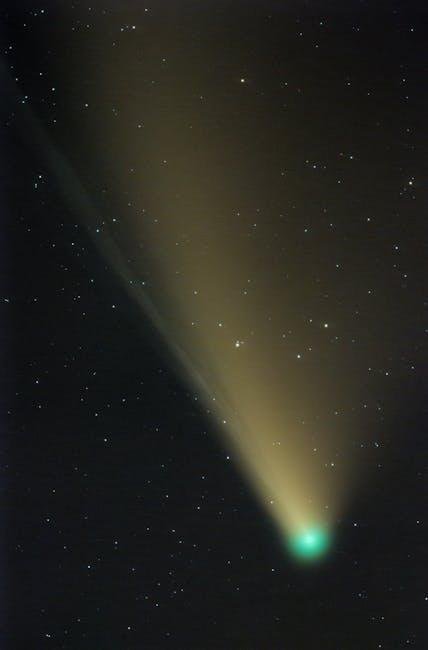
Unlocking the Secrets of the Deep Freeze: How Scientists Traced Interstellar Comet 3I/ATLAS to an Extremely Cold Origin
Space has always captivated the human imagination, but in recent years, our focus has shifted from the planets in our own backyard to the mysterious visitors arriving from interstellar space. Among these, the interstellar comet 3I/ATLAS has become a centerpiece of astronomical research.Recent studies have revealed that this icy wanderer originated from an environment of extreme cold, providing us with a “time capsule” from a far-off stellar nursery.
In this deep dive, we explore what makes 3I/ATLAS so unique, why its origin story is shaking up the scientific community, and what this means for our broader understanding of planetary system formation.
What is 3I/ATLAS? an Interstellar Traveler
To understand the magnitude of this discovery, we must first define what makes an object “interstellar.” While most comets and asteroids we observe are gravitationally bound to our Sun-residing in the Oort Cloud or the Kuiper Belt-interstellar objects are different. They are visitors from other star systems that have been ejected from their home environments and are now drifting through the galaxy.
3I/ATLAS (the third interstellar object identified by scientists) is not just another space rock. By analyzing its trajectory and chemical composition, researchers have pieced together a fascinating story about its birth. Unlike objects that may have formed in regions of intense heat near a host star, 3I/ATLAS bears the chemical signatures of a formation process that occurred in a deep, sub-zero cosmic environment.
Key Characteristics of Interstellar Objects (ISOs)
* Non-Bound Trajectories: Their paths through the solar system are hyperbolic, meaning they are not orbiting the Sun.
* Unique Chemical Signatures: The volatile compounds trapped within their ice offer clues about their parent star systems.
* High velocity: They travel at speeds that suggest they were accelerated out of their original systems by gravitational interactions.
Tracing the Cold origin: The science Behind the Discovery
How exactly do scientists determine where a comet came from? The process is a mix of orbital mechanics and spectroscopy. By observing the light reflected off the comet’s surface,astronomers can identify distinct molecules present in the comet’s coma-the cloud of gas and dust that forms as the object warms up slightly while nearing the Sun.
The Meaning of Extreme Cold
The research published via ScienceAlert indicates that 3I/ATLAS is composed of materials that only crystallize at extremely low temperatures (likely approaching those of deep interstellar space). This suggests that 3I/ATLAS likely formed in the outer reaches of a protoplanetary disk around a distant star,or perhaps even in the molecular cloud that preceded the star’s birth.
| Parameter | Observation | Scientific Implication |
|---|---|---|
| Orbital Velocity | Hyperbolic | Confirms interstellar origin |
| Chemical Composition | High Volatile Content | Indicates extremely cold formation |
| Surface Texture | Porous/Icy | suggests a long-duration cosmic journey |
Why Should We Care About “Cold” Comets?
Finding a comet that originated in such a glacial cradle is like finding an untouched manuscript from an ancient library. Most comets we see within our solar system have been subjected to billions of years of solar radiation and thermal processing.
Benefits of Studying 3I/ATLAS
- Understanding Planetary Formation: By studying how 3I/ATLAS formed, we can reverse-engineer the formation processes of distant solar systems.
- chemical Diversity: We can compare the “drip” of chemicals from interstellar objects to those that seeded Earth,helping
You might also like:
- The Sweet Farewell: Sprinkles Shuts Down After Two Decades
- The New Reality of Latin American Bonds: Political Alignment with the U.S.
- Apple’s Acquisition of MotionVFX: What It Means for Creators
- Understanding the CFTC’s New Approach to Regulating Prediction Markets
- Navigating the Korean Stock Market: A Comprehensive Guide
