
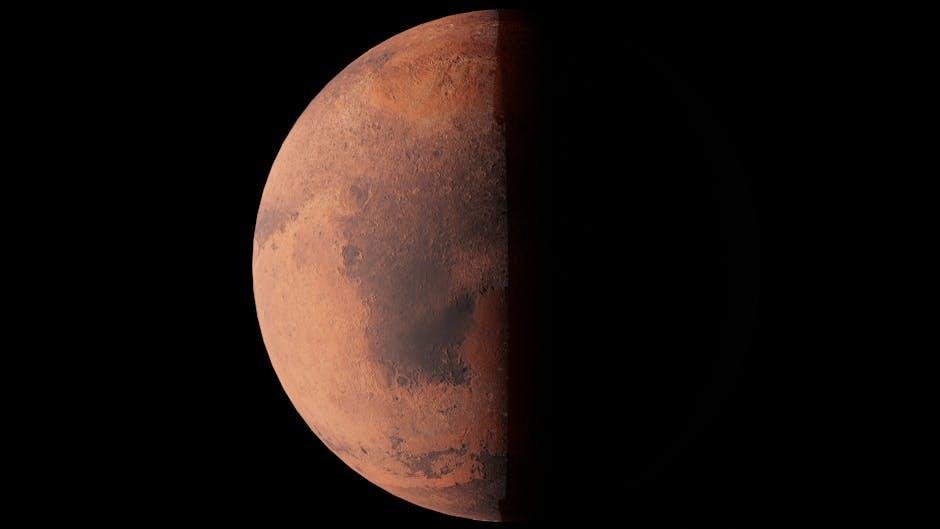
NASA’s Psyche Spacecraft: Why the mars Flyby is key to Reaching a Metal asteroid
When we think of NASA’s boldest missions, we often imagine them traveling in a straight line toward their destination. However, in the vast, unforgiving expanse of our solar system, the shortest distance between two points is rarely a straight line. This week, the space community is buzzing as NASA’s Psyche spacecraft-currently on a multi-year journey to a mysterious, metal-rich asteroid-has performed a dramatic close flyby of Mars. If the destination is the main asteroid belt, why would the mission team risk a detour to the Red Planet?
The answer lies in the elegant physics of gravity assists adn the cutting-edge technology propelling this mission into the history books. In this article,we’ll explore why the Mars flyby was a calculated move and what makes the Psyche mission one of the most exciting endeavors in modern space exploration.
The Psyche Mission: An Interplanetary Trek to Mystery
The Psyche mission is a journey into the uncharted. The spacecraft is currently navigating the vacuum of space, aiming to reach its target: an asteroid also named Psyche, located in the main asteroid belt between Mars and Jupiter [1].Unlike typical stony or icy asteroids, Psyche is believed to be metal-rich, potentially representing the exposed core of a fragmented planetesimal. By studying this metallic world, scientists hope to gain unprecedented insight into how planets like Earth formed their cores.
To reach this distant destination, NASA engineers must manage fuel consumption with extreme precision. While the spacecraft uses advanced propulsion, using the gravitational pull of planets is a necessity for long-haul space travel.
The “Slingshot” Maneuvers: Why Mars?
On its way to the main asteroid belt, psyche skimmed just 2,800 miles above the Martian surface [2]. Traveling at a staggering 12,000 miles per hour,the probe used Mars as a cosmic slingshot. This maneuver, known as a gravity assist, is a staple of deep space navigation.
By flying close to Mars, the spacecraft interacts with the planet’s gravitational field. This allows the probe to gain or change speed and alter its trajectory without burning precious propellant. For a mission that needs to reach the asteroid belt and then settle into a complex orbital pattern, saving fuel during the cruise phase is vital for the longevity of the prime mission, which begins in August 2029 [1].
Understanding Gravity Assists
Think of the Mars flyby as a celestial “gravity-assisted boost.” When the spacecraft approaches the planet, it is caught in the planet’s gravitational well. As it exits, it carries away a portion of the planet’s orbital momentum, effectively “stealing” speed to propel itself further into the solar system. This allows NASA to launch heavier payloads or reach higher velocities than a standard rocket launch would allow on its own.
| Mission Component | Strategic Purpose |
|---|---|
| Mars Flyby | Saving fuel and increasing velocity |
| Solar-Electric Propulsion | Efficient deep-space maneuvering |
| Laser Communications | High-bandwidth data transmission |
Technological Marvels: How Psyche Travels
The psyche spacecraft is not just a scientific laboratory; it is also a testing ground for next-generation space technology.The mission is the very first interplanetary project to utilize solar-powered Hall-effect thrusters for its primary propulsion [3].
Solar-Electric Propulsion (SEP)
Unlike traditional chemical rockets that provide a massive,short-duration burst of energy,Hall-effect thrusters fire continuously with a gentle,consistent push. These thrusters use electricity generated by massive solar panels to ionize xenon gas,accelerating the ions and spitting them out to create thrust. This method is incredibly efficient,allowing the spacecraft to traverse millions of miles with minimal propellant.
Laser Optical Communications
As the mission
You might also like:
- Taylor Swift and the Big Event: A Global Phenomenon
- Coinbase shifts Recent York prediction markets fight to federal court docket
- Latest Dot News Trends and Analysis: 24-Hour Global Overview
- Stellar (XLM) Market Trends: October 25, 2025
- 5 Essential Beyond Secrets Revealed
