
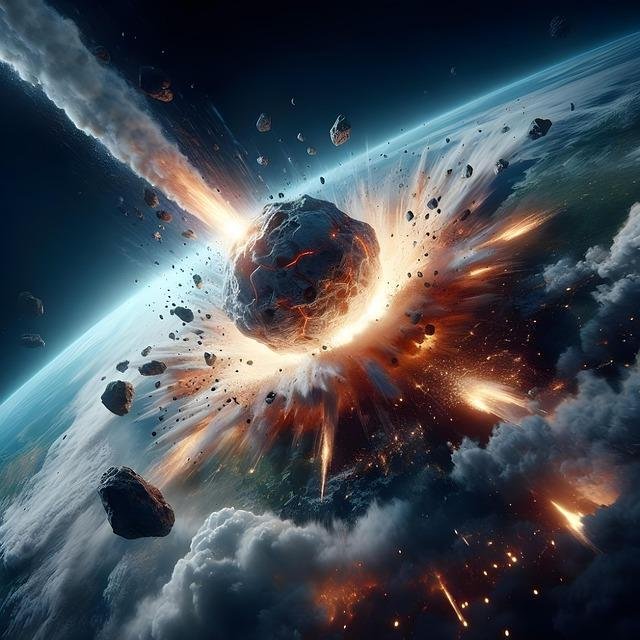
The Day the World Changed: Unlocking the Secrets of the Tanis Fossil Site
For millions of years, the Cretaceous period was a time of giants, dominated by the awe-inspiring presence of dinosaurs. But all empires must come too an end, adn for these prehistoric behemoths, the end arrived with sudden, catastrophic violence. For decades, the exact nature of the final hours of the dinosaurs remained a subject of intense scientific debate.However, a remarkable finding in the badlands of North dakota has provided what many experts describe as the “holy grail” of paleontology: a literal snapshot of the day the asteroid struck Earth.
At the Tanis fossil site in North Dakota, researchers have unearthed evidence that paints an incredibly vivid and haunting picture of the K-Pg (Cretaceous-Paleogene) extinction event. From microscopic glass spherules embedded in fish gills to evidence of massive, water-borne devastation, the Tanis site isn’t just a graveyard; it is indeed a time capsule of the most significant transition in Earth’s biological history.
What is the Tanis Fossil Site?
Located in the Hell Creek Formation, the Tanis site represents a geological anomaly. Most fossil sites preserve a span of thousands or millions of years, layering organisms over deep time. Tanis, however, appears to capture a window of time lasting only hours, perhaps even minutes.
The site captured a sudden, high-energy surge-a “seiche” or standing wave-triggered by the seismic waves from the Chicxulub impact in the Yucatan Peninsula, over 2,000 miles away. As the massive asteroid slammed into the planet, the resulting tremors traveled through the earth’s crust, causing inland waterways to slosh violently, trapping and burying organisms in a jumble of sediment before they could escape death.
Key Geological Findings at Tanis
* Impact Spherules: The discovery of tiny, sand-grain-sized glass beads (tektites) that rained down from the atmosphere as the impact debris cooled.
* Fish Gills: The most definitive proof of the site’s timeline is the presence of these glass beads lodged in the fossilized gill rakers of sturgeon and paddlefish. These fish were alive when the debris rain hit, and they were breathing in the fallout as they perished.
* Jumbled Assemblage: The fossil bed contains a chaotic mix of freshwater fish, terrestrial mammals, insects, and bits of trees, all entombed together by a massive influx of water.
A Window into the Apocalypse: How the asteroid Impact Unfolded
The story of Tanis is not just about fish and bones; it is about the physics of a planetary catastrophe. When the Chicxulub asteroid hit, it punched a hole in the Earth’s crust, sending millions of tons of vaporized rock, molten glass, and pulverized minerals into the upper atmosphere.
The Sequence of events
- The Impact: The asteroid hits the yucatan, releasing energy equivalent to billions of atomic bombs.
- Seismic Shaking: Within minutes to an hour of the impact, seismic waves radiate outward, hitting the north Dakota interior.
- The Standing Wave: The inland sea (The Western Interior Seaway) is affected by the shaking, causing water to surge up rivers and deltas, burying everything in its path with thick layers of sediment.
- The Debris Rain: As the incandescent glass beads reach the upper atmosphere and cool, they begin to fall like a lethal, fiery confetti, coating the landscape and filling the lungs of gasping aquatic life.
| Evidence Type | What it tells Us |
|---|---|
| Glass Spherules | Confirms the asteroid impact timeline. |
| Fossilized Fish | Provides proof of immediate death from fallout. |
| Sedimentary Layers | Shows the force of the seismic-induced wave. |
| Charred Wood | Indicates local or regional wildfire activity. |
Why Tanis Reinvigorated Dinosaur Research
Paleontology often feels like trying to put together a puzzle with missing pieces. Tanis provides the framework for the entire picture. By offering an instantaneous look at a major extinction event, it allows scientists to understand the “kill mechanism” with unprecedented clarity.
For years, there was doubt among some skeptics that the Chicxulub impact was truly responsible for the mass extinction. Some argued for gradual climate change or volcanic activity. The findings at Tanis link the site directly to the asteroid, effectively closing
You might also like:
- Transforming Historic Spaces: Expanding a Seattle Home
- Unmasking the Magic: Exploring the Artistry of Puppetry in the Music Video ‘Puppet’ by Zhu
- Former White Farmers in Zimbabwe Seek US Assistance for Unpaid Compensation
- Real Madrid Dominates Athletic Club in La Liga Clash
- Insects Donate DNA to Unrelated Bugs
