
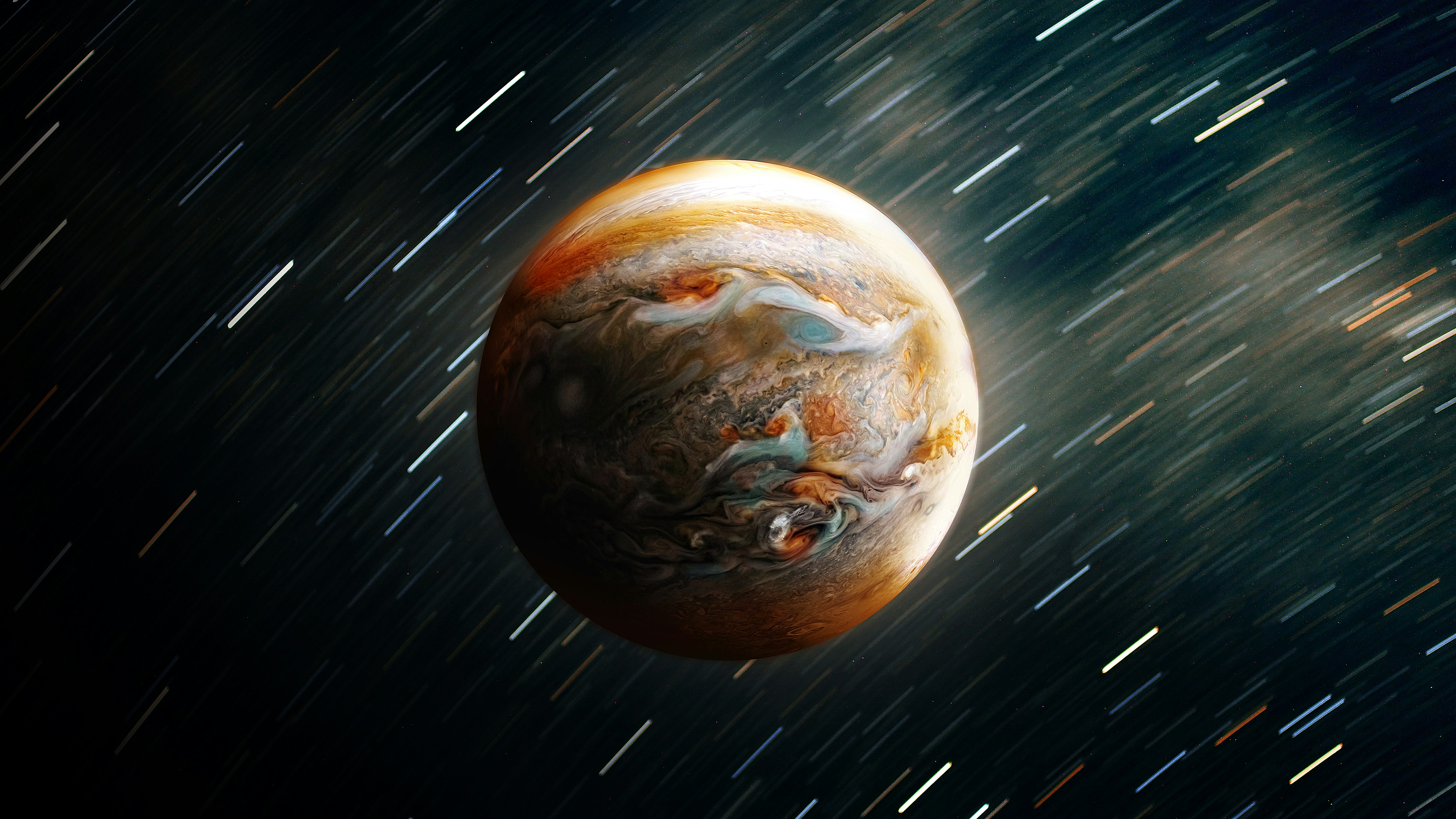
Introduction to the James Webb Telescope
The James Webb Space Telescope (JWST) represents a significant advancement in our capacity to explore the universe. Launched on December 25, 2021, this powerful observatory was developed through a collaborative effort between NASA, the European Space Agency (ESA), and the Canadian Space Agency (CSA). Its primary mission is to investigate various astronomical phenomena, with a focused emphasis on studying exoplanets, their atmospheres, and the conditions that might support life beyond our solar system.
One of the distinguishing features of the JWST is its revolutionary infrared capability. Unlike its predecessor, the Hubble Space Telescope, which primarily operates in the optical and ultraviolet wavelengths, the JWST is designed to observe the universe in the infrared spectrum. This allows it to penetrate dense clouds of dust and gas that often obscure celestial objects, enabling scientists to gain insights into star formation, galaxy evolution, and the atmospheric compositions of distant planets.
The JWST is equipped with a large segmented mirror measuring 6.5 meters in diameter, significantly larger than Hubble’s 2.4-meter mirror. This increased size enhances its light-gathering capability, which is crucial for observing faint objects located billions of light-years away. Additionally, the telescope is housed in a sunshield the size of a tennis court, which protects its sensitive instruments from solar radiation, ensuring optimal performance.
Through its mission objectives, the JWST aims to address fundamental questions regarding the origins of the universe, the formation of stars and galaxies, and the peculiar atmospheres of exoplanets. It seeks to provide unprecedented detail and depth of analysis, paving the way for a deeper understanding of the cosmos and our place within it. The advancements attributed to the JWST hold great promise for modern astronomy, representing the next frontier in our quest for knowledge about the universe and beyond.
The Breakthrough: First 3D Map of an Extrasolar Planet’s Atmosphere
The James Webb Space Telescope (JWST) has marked a significant milestone in the field of astronomy by achieving the first 3D map of an extrasolar planet’s atmosphere. This groundbreaking accomplishment provides invaluable insights into the atmospheric conditions of distant worlds, revolutionizing our understanding of exoplanetary science. The specific exoplanet observed in this study is known as WASP-39b, a gas giant located approximately 700 light-years from Earth.
Scientists utilized advanced spectroscopy techniques to analyze the light that passes through the atmosphere of WASP-39b as it transits its host star. By examining how this light is absorbed at various wavelengths, researchers can infer the composition and structure of the planet’s atmosphere. This method enabled them to create a detailed three-dimensional representation, revealing not only the chemical makeup but also the temperature and pressure variations throughout the atmospheric layers.
The 3D mapping process involves advanced computational models, allowing scientists to visualize atmospheric dynamics in ways that were previously unattainable. Instead of a flat two-dimensional image, the 3D modeling illustrates the complexities of weather systems and chemical interactions present within the atmosphere. This comprehensive approach proves essential for understanding phenomena such as cloud formation, temperature gradients, and the presence of various molecules, including water vapor and carbon dioxide.
The implications of this research extend beyond mere curiosity, as mapping the atmospheres of exoplanets is crucial for assessing their potential habitability. By revealing essential characteristics of WASP-39b’s atmosphere, astronomers can begin to compare these data with those of similar planets, paving the way for future explorations and discoveries. Ultimately, JWST’s achievement in 3D atmospheric mapping stands as a testament to the evolution of astronomical techniques and our growing understanding of the universe’s diverse planetary landscapes.
Extreme Temperature Fluctuations: Findings and Implications
The analysis of the mapped atmosphere of the exoplanet by the James Webb Telescope has revealed notable extreme temperature fluctuations. These variations in temperature can impact the atmospheric dynamics and, consequently, the overall climate of the planet. Temperature fluctuations can be primarily attributed to several factors, including the planet’s distance from its star, axial tilt, and orbital eccentricity. Such fluctuations indicate active atmospheric systems that are likely driving complex weather patterns, which in turn may transform the exoplanet’s climate into a more dynamic regime.
One significant finding indicates that temperature disparities across the planet’s atmosphere could lead to a heterogeneous climate, wherein some regions may experience sweltering heat while others remain frigid. This zonal temperature variation can substantially affect the chemical composition of the atmosphere. As temperatures rise, certain gases may become more prevalent, potentially creating a varied atmospheric chemistry across the exoplanet. This ultimately raises important questions regarding the planet’s habitability. Understanding the relationship between these temperature shifts and atmospheric composition is vital for determining whether life, as we know it, could exist under such extreme conditions.
Furthermore, the implications of these findings extend to future studies of exoplanets. The extreme temperature fluctuations observed could serve as a benchmark for researchers aiming to assess similar climates on other distant worlds. Future observations utilizing the James Webb Telescope or similar instruments could refine our understanding of exoplanetary atmospheres, leading to more profound insights into the processes that govern their evolution. By grasping the complexities of atmospheric behaviors prompted by temperature fluctuations, scientists might develop models that better predict the habitability of exoplanets beyond our solar system.
Future of Exoplanet Research and the Role of JWST
The future of exoplanet research is poised for significant advancements, largely due to the capabilities of the James Webb Space Telescope (JWST). As a cutting-edge observatory, JWST is equipped with sensitive instruments that allow it to analyze the atmospheres of exoplanets in unprecedented detail. This capability is particularly crucial as researchers aim to identify potentially habitable planets and understand their chemical compositions. The telescope’s ability to create a 3D map of atmospheres, as exemplified in recent observations, paves the way for emerging discoveries in the field.
In the coming years, JWST will undertake several planned observations, focusing not only on well-known exoplanets but also on newly discovered candidates. These observations will include a range of spectral analyses, enabling scientists to detect molecules associated with life, such as carbon dioxide and methane, in the atmospheres of distant worlds. This process will be instrumental in assessing the habitability potential of exoplanets and advancing our understanding of their climate systems.
Moreover, the collaboration between different space agencies, including NASA, ESA, and others, underscores the collective effort required in astronomical research. Such partnerships enhance resource sharing and technology development, ultimately enriching the field of exoplanet studies. The investment in telescopes like JWST signals the commitment to unravel the mysteries of the universe, promoting a deeper understanding of planetary systems beyond our own.
As new missions are planned, including the launch of the European Space Agency’s ARIEL mission, which aims to study the atmospheres of exoplanets in detail, there is great optimism surrounding the future of exoplanet exploration. The expansion of research tools and methodologies will likely revolutionize our comprehension of the universe and the potential for life beyond Earth, creating an exciting frontier for scientists in the field of astronomy.
You might also like:
- International Law and Diplomatic Tensions: Türkiye’s Arrest Warrants for Israeli Officials
- Liverpool’s Pursuit of Marc Guehi: What it Means for the Winter Transfer Window
- Match Highlights: Borussia Dortmund Triumphs Over Villarreal and Juventus Edges Bodo/Glimt
- Escalating Tensions: Israeli Airstrikes on Hezbollah Targets in Lebanon
- The Crucial Need for Daylighting: A Call for Action in New York City