
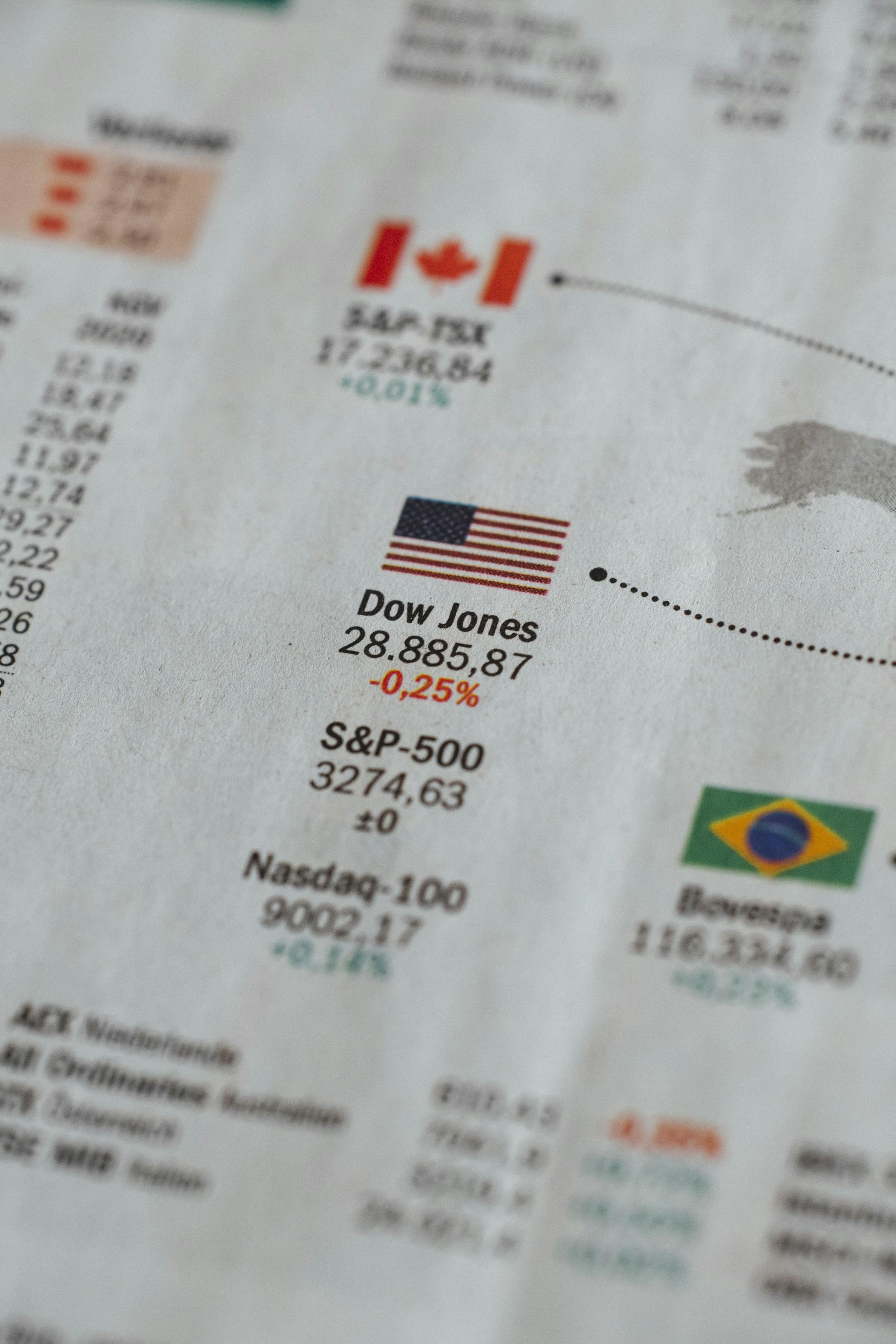
Overview of Major Global Indices
Stock indices are vital instruments in the world of finance, serving as benchmarks that reflect the performance and health of specific segments of the financial markets. They are collections of stocks that represent a particular market or sector, providing investors with an aggregated view of how the market is performing. Among the prominent global indices are the Dow Jones Industrial Average, S&P 500, Nasdaq Composite, FTSE 100, and others, each playing a significant role in gauging market trends and investor sentiment.
The Dow Jones Industrial Average is one of the oldest and most recognized stock indices, comprised of 30 large, publicly-owned companies in the United States. Its movements are often seen as a clear indicator of the overall health of the U.S. economy. Similarly, the S&P 500 includes 500 of the largest companies and is frequently utilized by investors as a performance benchmark for the entire market.
On the technological side, the Nasdaq Composite index focuses more on technology and internet-based companies. This index includes over 3,000 stocks, making it particularly dynamic and sensitive to shifts in technology trends. Across the Atlantic, the FTSE 100 represents the 100 largest companies listed on the London Stock Exchange and is fundamental for gauging market sentiment in the UK. Each of these indices serves not only as financial metrics for investors but also as economic indicators, influencing investment decisions worldwide.
In recognizing the significance of these indices, one should understand their implications on trading strategies and portfolio management. Investors across the globe monitor these indices closely, as changes can affect market predictions and financial conditions. Hence, a comprehensive understanding of major global stock indices is essential for navigating the complexities of modern financial markets.
Recent Performance of US Indices
In recent weeks, the performance of major US stock indices has shown a modest yet notable uptick, reflecting emerging market sentiments and economic forecasts. Specifically, the Dow Jones Industrial Average has seen slight increases, evidencing a change in investor confidence despite ongoing global uncertainties. The futures for the Dow Jones, for instance, have recorded an increase of approximately 0.22%, while the S&P 500 has experienced a slightly higher gain of 0.24%. These changes signify a cautious optimism prevailing in the market as investors react to various economic indicators.
The positive trajectory of US indices can be attributed to several factors. For starters, recent economic data releases have portrayed a picture of resilience within the economy. Notably, robust job growth figures and an uptick in consumer spending have instilled a sense of confidence among investors. Additionally, earnings reports from several prominent companies have surpassed market expectations, further fueling optimism. These results underscore a potentially stable economic environment conducive to investment, stirring interest in both established and emerging sectors.
Moreover, political developments and global interactions have also played pivotal roles in influencing market performance. The US Federal Reserve’s stance on interest rates has remained a critical factor; any indications that rates will be held steady or lowered in the near future can lead to bullish sentiment in the market. Furthermore, developments in international trade and geopolitical relations, particularly with strategic partners, can impact the overall outlook of US indices. Hence, while the recent performance of US stock indices indicates a gradual recovery, investors are advised to remain vigilant and consider broader economic and geopolitical contexts.
Global Reactions and Economic Indicators
The interconnectivity of global markets means that the performance of major stock indices across the world is often influenced by a variety of economic indicators and news from different regions. Recently, a notable shift in investor sentiment has been observed, largely driven by economic reports revealing insights into inflation rates, unemployment levels, and gross domestic product (GDP) growth across various nations. For instance, the release of stronger-than-expected employment figures in the United States has typically led to a positive reaction in US indices, such as the S&P 500 and Dow Jones Industrial Average, which are viewed as barometers of economic health.
In comparison, European and Asian markets exhibit their own unique reactions to these economic shifts. For example, Eurozone indices, including the DAX in Germany and the CAC in France, often display volatility in response to both domestic and international economic news. Current trends indicate that European indices are undergoing fluctuations due to concerns over energy prices and inflation. Meanwhile, Asian markets, represented by indices such as the Nikkei in Japan and the Shanghai Composite in China, are largely influenced by trade relations and regulatory changes, which directly impact investor confidence.
Furthermore, the relationships between these indices can provide valuable insights into global economic health. It is essential to note that a positive trend in US stock markets can occasionally lead to a ripple effect in global indices, encouraging momentum elsewhere. Conversely, negative developments, such as geopolitical tensions or disappointing economic data from significant markets, can lead to substantial declines across various global indices. Therefore, understanding the interplay of these economic indicators is crucial for anticipating stock market behavior and making informed investment decisions. This intricate balance of market reactions illustrates the importance of keeping a close eye on global economic developments as they unfold.
Looking Ahead: Future Outlook for Global Indices
As we analyze the future landscape of major global stock indices, it is essential to consider various economic factors and market sentiment that may influence their trajectory. Analysts are anticipating a fluctuating economic environment, where inflation rates and central bank policies will play pivotal roles in investor decision-making. The ongoing adjustments in monetary policy by central banks, particularly in response to inflationary pressures, could lead to significant volatility in stock prices. Hence, investors should prepare for possible adjustments in market behavior as these economic policies unfold.
Furthermore, geopolitical events are increasingly becoming a factor that can disrupt or propel market movements. Tensions arising from international trade, political instability, and ongoing conflicts can lead to changes in investor sentiment. As we have witnessed in recent years, crises or conflicts can prompt market sell-offs, while resolutions may foster a bullish outlook. Investors must remain vigilant and adaptable to these changes, with informed strategies in place to navigate through uncertainty.
In addition to external challenges, technological advancements continue to shape market dynamics. The rise of artificial intelligence and fintech innovations is likely to influence how investors interact with markets, providing new tools for analysis and trading. Companies that adapt swiftly to these technological changes may perform better, impacting their stock prices and the indices they belong to.
In conclusion, the future of global stock indices remains uncertain, with various economic challenges and geopolitical factors that may significantly affect investor strategies. The interplay between these elements will be crucial in determining how indices perform in the coming months. Investors are encouraged to stay informed and agile to seize potential opportunities while mitigating risks that may arise in this complex financial environment.





