
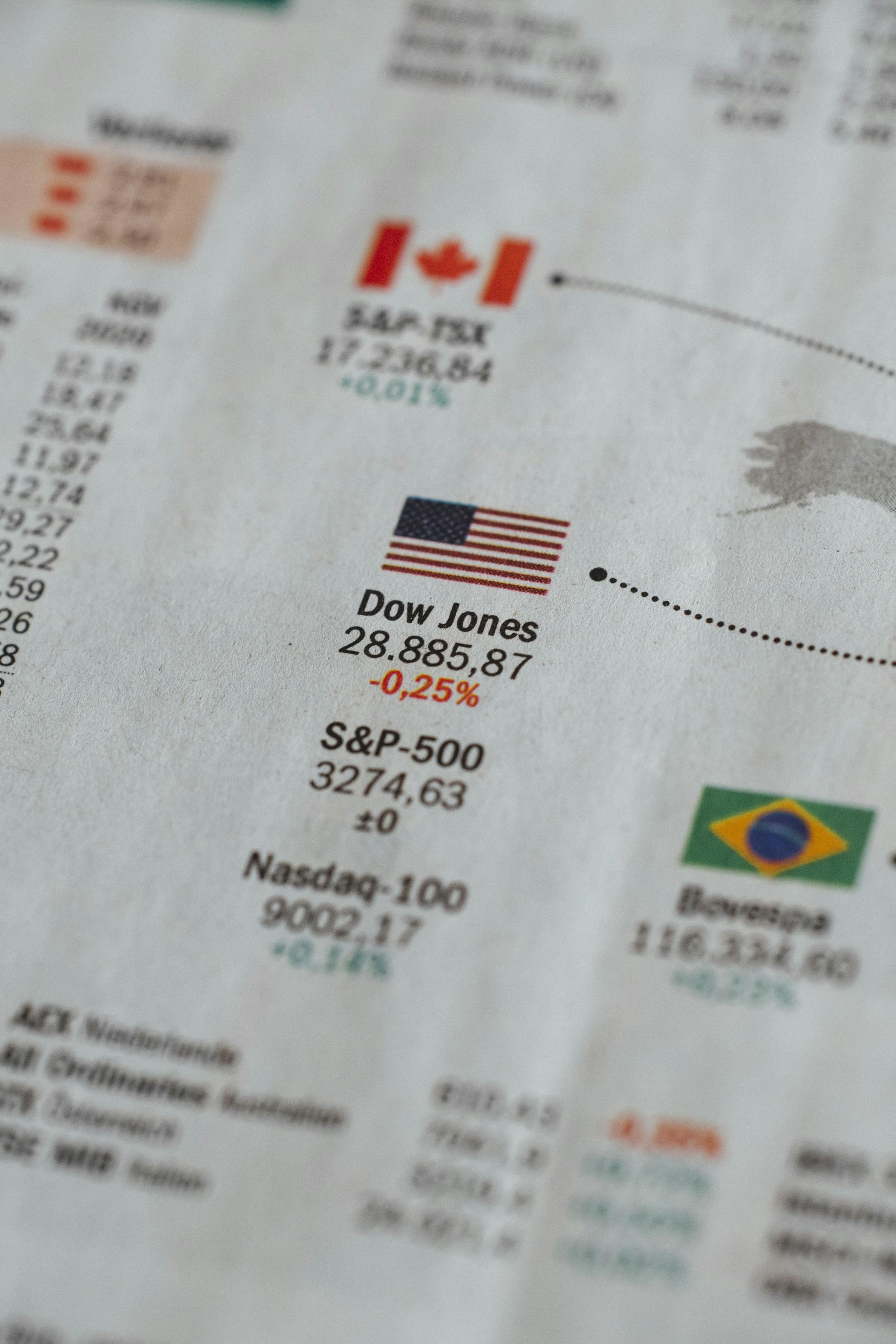
Overview of Global Stock Indices
Global stock indices are essential tools that measure the performance of a selected group of stocks, representing a particular market or sector. These indices serve as vital indicators of economic health and investor sentiment, reflecting the aggregate performance of equities in the financial markets. By consolidating the performance of multiple stocks, they provide investors with a broader view of market trends, enabling informed decision-making regarding investments.
The significance of global stock indices extends beyond their role as mere barometers of market activity. They allow investors to gauge the overarching economic performance of various regions and sectors, influencing investment strategies. Major global indices, such as the S&P 500, Dow Jones Industrial Average, and FTSE 100, serve as benchmarks against which individual stocks are compared. Consequently, the performance of these indices affects not just institutional investors but retail investors as well, who may view index movements as indicators of market direction.
Tracking these indices is essential for understanding market dynamics. For instance, an upward trend in a significant index might encourage investors to take on more risk, while a downward trend can lead to increased caution. Additionally, global stock indices often reflect external factors such as geopolitical events, economic reports, and shifts in monetary policy, further influencing investor behavior.
Through thorough analysis, investors draw correlations between stock movements within indices and potential economic outcomes. This interconnectedness highlights the importance of global stock indices in formulating strategies and making prudent investment choices. As this post delves deeper into specific stock indices from various regions, it is crucial to appreciate the foundational role these indices play in navigating the complexities of financial markets.
Asian Indices Performance
In recent months, the performance of major Asian stock indices has showcased a mix of volatility and growth, reflecting the uniqueness of each country’s economic environment and market sentiment. The Nikkei 225, representing Japan’s equity market, has notably demonstrated resilience, driven by a combination of robust corporate earnings and supportive monetary policy from the Bank of Japan. As of late September 2023, the Nikkei 225 reported an increase of approximately 15% year-to-date, appealing to both domestic and foreign investors.
Hong Kong’s Hang Seng Index, however, displayed a more complicated narrative. Following a turbulent period characterized by regulatory changes and geopolitical tensions, the index has made gradual recovery, rising about 8% since the beginning of the year. This uptick can be attributed to newfound investor optimism surrounding the reopening of markets and an anticipated recovery in the property sector, which is crucial for Hong Kong’s economy.
The South Korean Kospi has also witnessed significant fluctuations, ending September with an approximate gain of 10%. This performance can be linked to strong demand in the technology sector, with key players like Samsung and LG posting encouraging results. Favorable trade agreements and a rebound in exports have further bolstered investor confidence, reinforcing positive sentiment within the market.
In contrast, China’s Shanghai Composite Index has faced challenges, struggling with regulatory pressures and concerns over economic growth. Despite these hurdles, the index is up by around 5% year-to-date, as local consumers begin to recover and the government implements stimulus measures to spur growth. Analysts believe that while uncertainties remain, these efforts could help stabilize the index moving forward.
Overall, the landscape of Asian stock indices reflects a complex interplay of local economic developments, government policies, and overall market sentiment, making it imperative for investors to stay informed as they navigate this dynamic region.
Major Movers in Asian Indices
In recent trading sessions, several Asian stock indices have showcased notable performances, particularly the Nikkei 225, Kospi, Hang Seng, and Shanghai Composite. Each index has responded uniquely to market dynamics, driven by both local and global events. Understanding the standout movements among these indices is crucial for investors seeking to navigate the complexities of the regional market.
The Nikkei 225 has been buoyed by a combination of robust corporate earnings and increased foreign investment. Japanese companies have reported stronger-than-expected profits, which have positively influenced market sentiment. Moreover, the Bank of Japan’s accommodative monetary policies continue to provide a supportive backdrop, with low interest rates enhancing the appeal of equities. Investors have been particularly optimistic about technology and manufacturing sectors, propelling the index to multi-decade highs.
Meanwhile, South Korea’s Kospi has also experienced significant gains, largely driven by the technology sector’s resilience. Strong demand for semiconductors during this global digital transformation has played a pivotal role in elevating stocks of major players within this field. Analysts note that the Kospi has benefitted from international supply chain recovery, which has further stimulated investor confidence and supported price gains across the board.
The Hang Seng Index has faced a more volatile landscape, influenced by geopolitical tensions and regulatory changes. However, a recent rally can be attributed to positive economic data emerging from China, which has led investors to reassess the growth potential of Hong Kong-listed companies. The easing of some pandemic restrictions has invigorated consumer spending, providing additional momentum to the index’s recovery.
Lastly, the Shanghai Composite has shown resilience, as government policies aimed at stabilizing the economy have begun to take effect. Increased infrastructure spending alongside strategic government initiatives has enhanced market confidence, leading to substantial gains in various sectors such as construction and materials. The overall outlook for these major Asian indices will require diligent monitoring of both economic indicators and global market trends for sustained momentum.
Future Outlook for Global Indices
The future outlook for major global stock indices, particularly in Asia, is shaped by a confluence of economic trends, geopolitical developments, and market sentiment. Analysts foresee a complex landscape in the near term, characterized by both opportunities and risks. As the global economy continues to recover from the impacts of the pandemic, Asian markets, including key indices such as the Nikkei 225, Hang Seng Index, and Shanghai Composite, are expected to experience significant volatility.
Future projections remain cautiously optimistic, with some analysts predicting moderate growth in Asian stock indices. Factors contributing to this anticipated growth include recovering consumer spending, increased industrial output, and supportive fiscal and monetary policies across the region. Moreover, the ongoing transition towards green technologies and digitalization presents new avenues for investment, which could bolster long-term performance of these indices. It is essential for investors to remain vigilant regarding sector-specific trends, particularly in technology and renewable energy, which are likely to drive substantial capital flows.
However, potential risks must not be overlooked. Geopolitical tensions, particularly regarding U.S.-China relations, continue to pose a threat to market stability. Additionally, rampant inflation, shifts in central bank policies, and global supply chain disruptions may create hurdles for growth. Investors should closely monitor these economic indicators as they would significantly influence market performance. Furthermore, trends in commodity prices and interest rates are critical factors that could affect investor sentiment and liquidity in global indices.
In conclusion, the future outlook for major global stock indices, especially in Asia, is marked by a mixture of optimism and caution. Investors would benefit from staying informed about both macroeconomic trends and geopolitical developments, enabling them to make more informed decisions in an ever-evolving investment landscape.





