
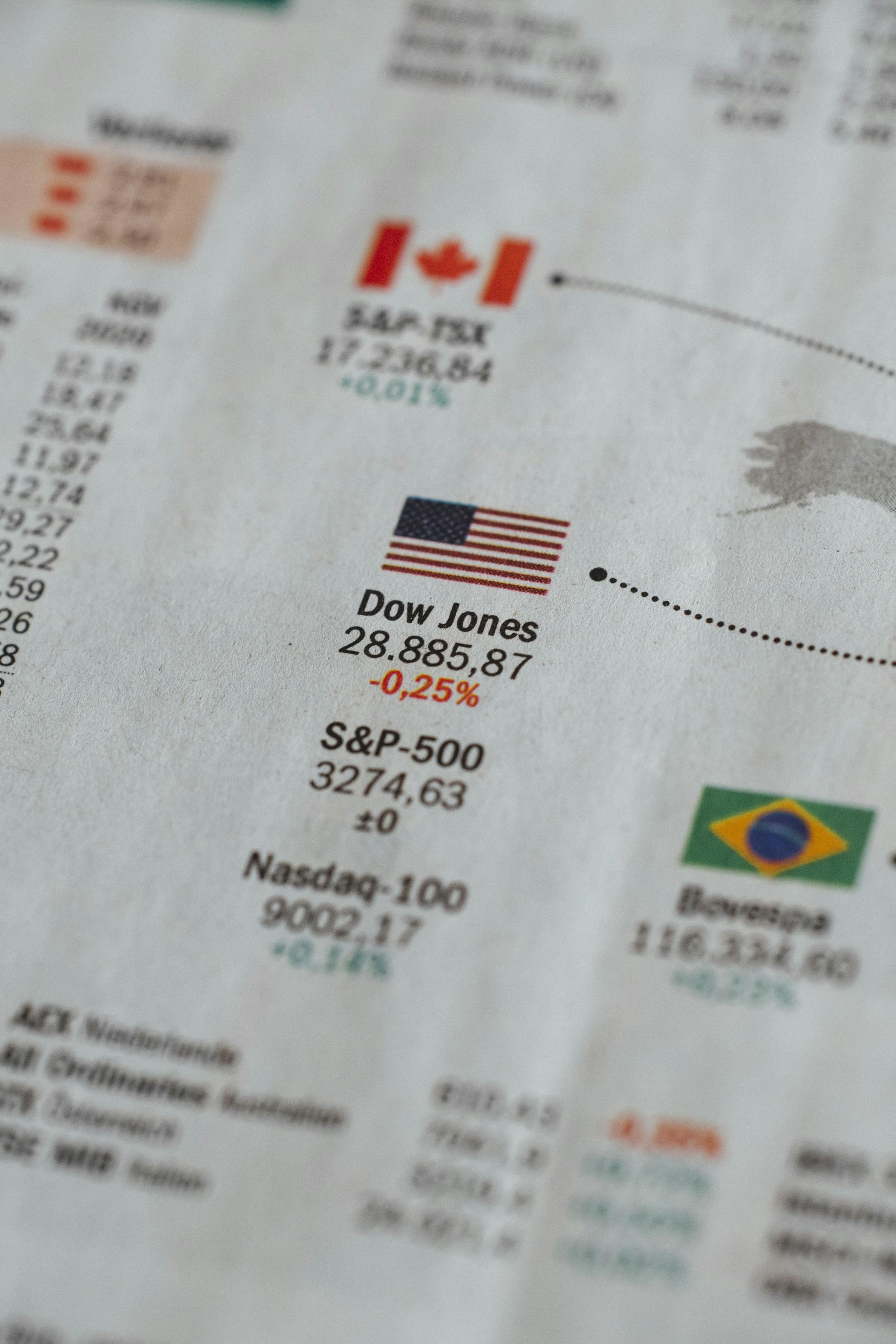
Overview of Major Global Indices
Global indices, also known as stock market indices, are statistical measures that reflect the performance of a specific segment of the stock market. These indices are constructed using a curated selection of stocks that represent a larger market, allowing investors to gauge market trends and investment returns. They serve as essential benchmarks for both individual investments and the overall performance of the stock market. By tracking the movements of these indices, investors can better understand the health and direction of the economy.
Among the most notable global indices are the FTSE 100, DAX, and CAC 40. The FTSE 100 is the benchmark index for the London Stock Exchange, comprising the 100 largest companies by market capitalization. Meanwhile, the DAX is the German stock market index, representing 30 of the largest companies in Germany listed on the Frankfurt Stock Exchange. The CAC 40, on the other hand, is a benchmark French stock market index that tracks the 40 largest publicly traded companies on the Euronext Paris.
In recent sessions, these major global indices have demonstrated a mixed bag of performance. The FTSE 100 has shown resilience amid economic uncertainties, maintaining relative stability even while facing inflationary pressures. Conversely, the DAX has experienced fluctuations due to geopolitical tensions affecting the European economic landscape, resulting in a moderate decline over the past few weeks. Meanwhile, the CAC 40 has also faced challenges, although it has made some gains driven by positive corporate earnings reports. Collectively, these indices exemplify the varied responses of global markets to external economic influences, highlighting significant trends and notable movements within the broader financial landscape.
European Indices: A Closer Look
The performance of major European indices in recent months has revealed a mixed landscape, reflecting various underlying economic and geopolitical factors. The FTSE 100, which represents the largest companies listed on the London Stock Exchange, has demonstrated notable resilience, buoyed by strong commodity prices and favorable earnings from energy and mining firms. These aspects have provided a somewhat stable environment, allowing the index to maintain a positive trajectory despite broader market fluctuations.
In stark contrast, the DAX, Germany’s premier stock index, has faced significant headwinds. Recent economic data releases have highlighted growing concerns about inflation and its potential impact on consumer spending. Moreover, ongoing geopolitical tensions, particularly related to energy supply in the wake of the Ukraine conflict, have exacerbated volatility among German equities. As a result, the DAX has experienced periods of sharp declines, illustrating the sensitivity of this index to external pressures.
The CAC 40, which represents the leading French companies, has shown a more variable performance, echoing the mixed results seen in European markets overall. While some sectors have thrived, particularly luxury goods and technology, others remain vulnerable to economic shifts. Corporate earnings reports have been a double-edged sword, with companies like LVMH reporting strong profits, whereas others have faced disappointing results, underlining the impact of global supply chain challenges.
Overall, the performance of these indices indicates a complex interplay of factors, such as evolving economic indicators, corporate earnings performances, and the broader geopolitical landscape affecting investor sentiment. As investors navigate through this mixed scenario, keeping an eye on these dynamics will be crucial for making informed decisions in the coming months.
Comparative Performance Analysis
The performance of European indices has shown a distinctive narrative when compared to their global counterparts, such as the S&P 500 and the Nikkei 225. Over the past year, the European stock markets have experienced varied trends, influenced by specific regional economic factors, geopolitical developments, and responses to monetary policy decisions. While the S&P 500 has displayed resilience due to its tech-heavy composition and robust earnings growth in the technology sector, European indices have faced headwinds attributed to rising energy costs and inflationary pressures.
The FTSE 100 in the United Kingdom, for instance, has shown steady performance as it benefited from a weaker pound and a strong commodities sector. Conversely, the DAX 30 in Germany reflects the turbulent state of Europe’s manufacturing sector, grappling with supply chain challenges and decreasing demand in some areas. The Nikkei 225, on the other hand, has capitalized on Japan’s recovery efforts and export growth, particularly in technology and automotive sectors, driven by increased global demand.
These variances in performance underscore the influence of regional economic conditions on stock market returns, demonstrating that while markets may be interconnected, their trajectories can diverge significantly. Economic indicators, such as interest rates and inflation data, play a vital role in shaping investor sentiment and market outlook across the globe. The differing influences faced by European indices relative to those in the United States and Asia delineate critical distinctions worthy of attention.
In summarizing the comparative performance analysis, it becomes evident that the interplay of local and global economic factors creates a complex tapestry of investment opportunities and challenges. Monitoring these patterns can facilitate a greater understanding of the global equity landscape and its future movements.
Future Outlook and Investor Considerations
As we look ahead into the financial landscape, the mixed performance of major global indices suggests a period of volatility and uncertainty for investors. Anticipated economic reports, central bank meetings, and political developments are critical elements that could significantly influence market trends moving forward. Upcoming macroeconomic indicators, including inflation rates and employment statistics, will be closely monitored as they often wield substantial impact on investor sentiment and, consequently, market direction.
Central banks are expected to maintain a pivotal role in steering economic policy in the near future. For instance, interest rate decisions by major institutions like the Federal Reserve or the European Central Bank could lead to fluctuations in market performance. Investors should pay attention to the language used in central bank communications, as any signals regarding shifts in monetary policy could notably sway market indices. Additionally, geopolitical situations, such as trade negotiations or political unrest, may create ripple effects throughout global markets, further influencing the behavior of indices.
Given these considerations, a diversified investment strategy becomes imperative in a mixed-performance environment. Spreading investments across various asset classes, sectors, and geographical regions can mitigate risks associated with individual market fluctuations. It may be prudent for investors to remain cautious and adapt their portfolios in light of impending economic events. Flexibility in strategy, complemented by an awareness of ongoing developments, will better prepare investors to navigate the complexities of the current financial climate.
By maintaining a balanced approach and staying informed on both domestic and international events, investors can position themselves advantageously even as global indices exhibit a variety of performance patterns. This vigilance may aid in weathering the unpredictable nature of financial markets, ensuring their portfolios remain resilient amidst these shifts.