
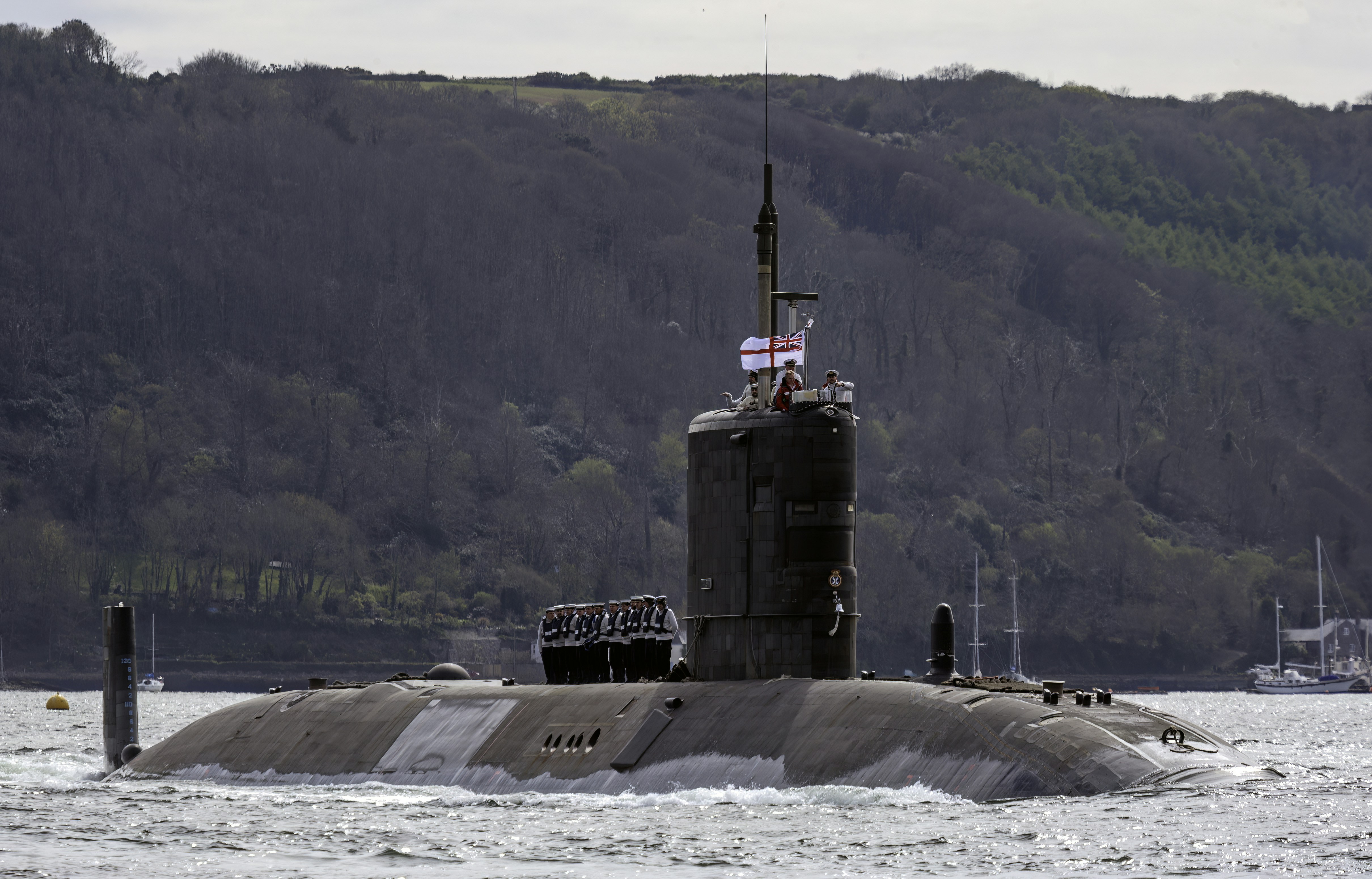
Introduction to Russia’s New Nuclear Submarine
The recent launch of Russia’s latest nuclear submarine marks a significant advancement in the nation’s military capabilities. This vessel, part of the advanced Project 955A Borei-class, showcases an array of state-of-the-art technologies designed to enhance its operational effectiveness. With improved stealth features and advanced missile systems, this submarine is poised to play a critical role in Russia’s maritime strategy. The strategic importance of this submarine extends beyond its technological specifications; it symbolizes Russia’s commitment to modernizing its naval fleet and maintaining a formidable presence in international waters.
Equipped with the Bulava missile system, the new submarine is capable of delivering nuclear payloads over long distances, thereby enhancing Russia’s deterrence posture. The Bulava missiles can evade current missile defense systems, providing a substantial advantage in naval warfare. This alignment with Russia’s broader military modernization efforts underscores its objective to reinforce its status as a primary military power. Additionally, the submarine’s ability to operate stealthily increases the challenges faced by potential adversaries, fostering an environment of uncertainty and strategic deterrence.
The implications for global security are profound. As Russia continues to enhance its military assets, the balance of power in maritime regions may shift, prompting other nations to reassess their defense strategies. This submarine’s introduction may provoke an arms race in naval capabilities, as countries seek to counterbalance Russia’s significant advancements. Furthermore, the deployment of such sophisticated vessels may lead to increased tensions in sensitive geopolitical areas, particularly in the Arctic and the North Atlantic, where naval presence is crucial. Thus, the integration of this new nuclear submarine into Russia’s naval fleet is not merely a technical upgrade; it represents a pivotal shift in the nation’s approach to military strategy and international relations.
Mobilization of Reservists: A Strategic Decision
The recent decision by President Vladimir Putin to sign into law a mobilization initiative for reservists marks a pivotal moment in Russia’s military strategy. This move primarily aims to fortify vital infrastructures, particularly focusing on key economic assets such as oil refineries, which play a crucial role in sustaining the nation’s economy during periods of geopolitical uncertainty. The mobilization of these reservists not only enhances military readiness but also serves as a preventive measure against potential threats to these essential facilities.
Several factors underpin this strategic decision, reflecting both geopolitical dynamics and domestic pressures. On the international front, Russia faces ongoing tensions with several western nations, raising concerns over the security of its borders and critical resource infrastructures. Mobilizing reservists can be interpreted as a response to perceived external aggressions, ensuring that adequate protective measures are in place to defend against any potential sabotage or direct assaults on key sites. This change in policy delineates a proactive stance in which the Russian government seeks to assert its military capabilities amidst escalating global tensions.
Domestically, the law reflects an acknowledgment by the Russian leadership of the necessity to secure economic resources that are vital for the country’s stability. By arming reservists and integrating them into protection initiatives, the government is taking steps to reassure its citizens that key infrastructure is secure, thereby aiming to maintain public confidence and operational continuity within critical sectors. The augmentation of personnel dedicated to securing these assets underscores a broader strategy of resource allocation, as Russia emphasizes its commitment to safeguarding its economy in these tumultuous times.
This mobilization initiative serves as a telling indicator of Russia’s military readiness. By enhancing the capacity to protect essential economic infrastructure, the law highlights the importance placed on preparedness in an increasingly volatile global scenario. Thus, this strategic decision is not only a reflection of the current geopolitical landscape but also an essential component of Russia’s overarching military strategy.
Putin’s Vision: New Weapons for 21st Century Security
President Vladimir Putin continues to emphasize the importance of modernizing Russia’s military capabilities to align with the security demands of the 21st century. In recent statements, he has revealed a comprehensive strategy aimed at developing advanced weapon systems that are both technologically sophisticated and strategically significant. These new technologies include hypersonic missiles, robotic warfare systems, and advanced cyber capabilities, which are positioned as essential tools for enhancing national defense and asserting Russia’s influence on the global stage.
One of the pivotal advancements highlighted by Putin is the development of hypersonic weapons, which are designed to travel at speeds greater than Mach 5. These systems not only challenge existing missile defense systems employed by other nations but also provide Russia with a first-strike advantage in a rapidly changing global military landscape. The deployment of such weapons could alter the strategic balance and promote a competitive arms race, as other countries, particularly the United States and China, may feel pressured to enhance their own military capabilities to counter these advancements.
Moreover, Russia is also investing in unmanned systems, including drones and autonomous vehicles, which are intended to conduct reconnaissance missions and perform combat operations without putting personnel at risk. This marks a significant shift in military strategy, as it embraces the integration of artificial intelligence in warfare. As these technologies become more prevalent, the implications for international relations could be profound, potentially leading to a new era of military engagement that prioritizes speed and precision.
As the global geopolitical landscape evolves, Russia’s advancements in military capabilities will undoubtedly impact discussions around disarmament and global peace initiatives. The ascent of new weapons systems reflects a broader trend of modernization seen among world powers, highlighting the need for a robust dialogue on arms control to prevent conflict escalation and foster international stability.
Conclusion: The Broader Impact on International Dynamics
The recent advancements in Russia’s military capabilities, particularly marked by the new submarine launch and the mobilization of reservists, bear significant implications for international dynamics. These developments are indicative of a broader strategy aimed at enhancing Russia’s defense posture and assertiveness on the global stage. The introduction of advanced submarines can shift the balance of naval power in contested regions, prompting reactions not only from NATO members but also from other global powers engaged in maritime activities.
As military alliances are tested, countries may find themselves reevaluating their defense policies in response to Russia’s actions. The mobilization of reservists signals a readiness to respond to perceived threats, potentially escalating tensions in already fragile geopolitical landscapes. Analysts suggest that this could lead to an arms race or exacerbate existing conflicts, particularly in Eastern Europe and the Arctic, where strategic interests intersect. The ramifications extend beyond military considerations, as economic factors, including sanctions and trade relations, may also be influenced by these military maneuvers.
Furthermore, the global economy could experience shifts, as energy security and defense spending are likely to be front and center in discussions among policymakers. Russia’s advancements may compel nations to invest more heavily in military capabilities, thus impacting public spending and international trade agreements. Diplomatic efforts may become more complex, with nations compelled to navigate a landscape where military posturing influences negotiations and foreign relations.
Ultimately, the actions taken by Russia serve as a call to examine the intricate web of global security, economics, and diplomacy. The evolution of military capabilities requires cautious observation and strategic planning by policy makers and analysts to mitigate potential risks to stability in international order.