
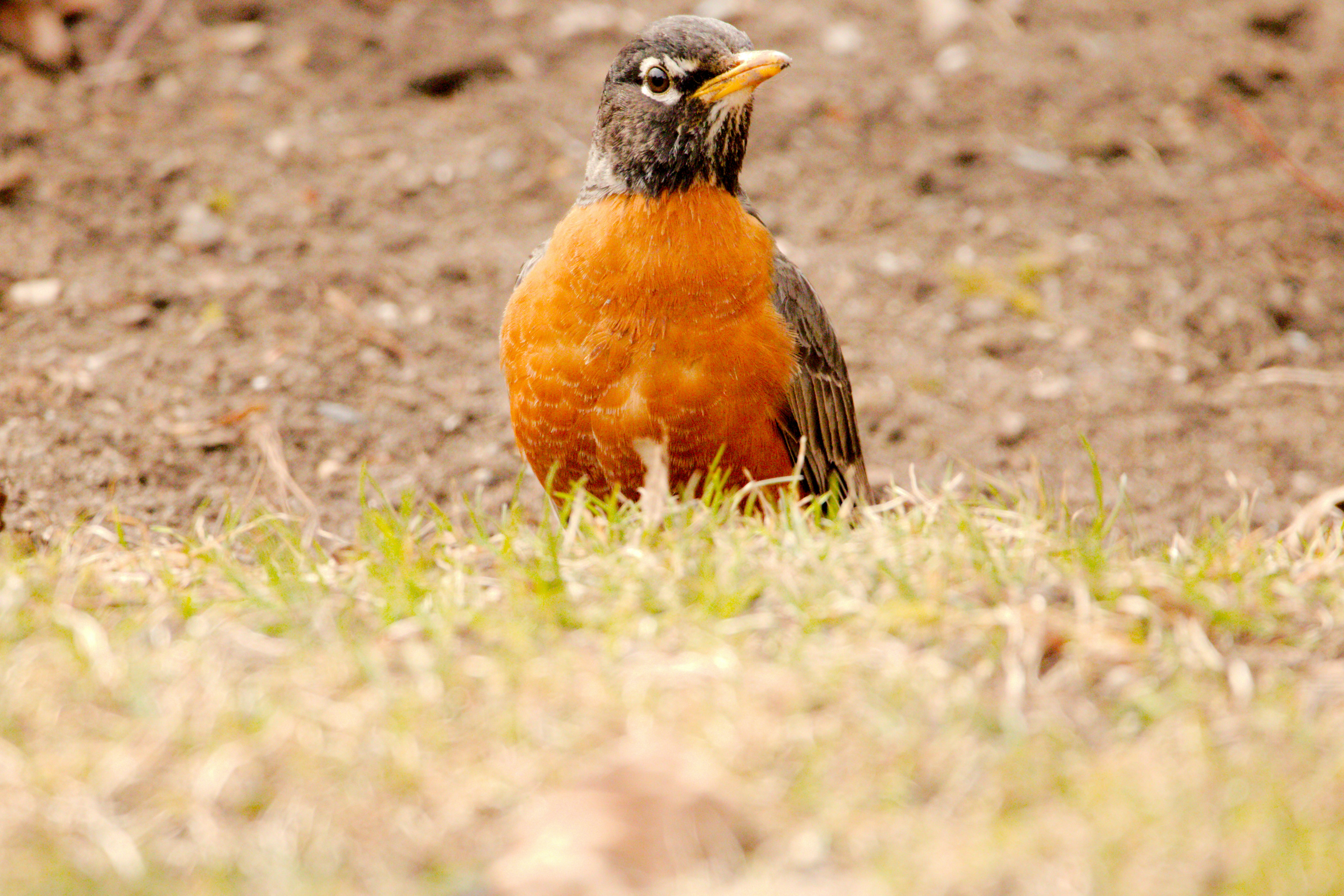
Introduction to the American Robin
The American Robin (Turdus migratorius) is a familiar sight across North America, often regarded as a symbol of spring. This migratory bird belongs to the true thrush genus, Turdus, and is part of the Turdidae family. The American Robin is distinguished by its vibrant reddish-orange breast, which serves as a striking visual marker that differentiates it from many other avian species. This coloration is not merely aesthetic; it plays a significant role in the bird’s mating rituals and territorial displays.
The naming of the American Robin has a notable connection to the European Robin (Erithacus rubecula). Both birds share a resemblance, particularly in their breast plumage, which leads to the common name for the American species. However, despite sharing a name and some physical traits, these two birds are classified in different families and exhibit distinct behavioral and ecological differences. The European Robin is a member of the Old World flycatcher family, Muscicapidae, further highlighting the diversity found within the avian world.
The American Robin is widely recognized for its migratory patterns. During the winter months, it typically travels to warmer regions, including parts of Mexico and the southern United States. In spring, the American Robin returns to its northern breeding grounds, often heralding the start of the warmer season for many observers. This migratory behavior not only influences the Robin’s habitat preferences but also affects its feeding habits and reproductive cycles, making it an important study subject for ornithologists and bird enthusiasts alike.
Habitat and Distribution
The American Robin, scientifically known as Turdus migratorius, is a widely recognized bird species primarily found throughout North America. Its habitat preferences are diverse, ranging from suburban backyards to woodlands, gardens, and parks. The American Robin is adaptable and demonstrates a particular affinity for open spaces with a combination of trees and shrubs, which provide both shelter and nesting opportunities. Furthermore, this bird is frequently seen foraging in grassy areas, where it searches for earthworms and other ground-dwelling invertebrates.
During the breeding season, which typically spans from late March to early August, American Robins favor nesting in areas that offer plenty of food sources and cover. Such locale selections often include areas with low shrubs or stable trees, as these create a secure environment for raising their young. As for their wintering distribution, American Robins migrate southwards to escape harsh winter conditions. Their winter habitat ranges from southern Canada down through the central United States to as far as central Mexico, particularly along the western coastal regions.
The environmental conditions that favor the presence of American Robins include moderate to humid climates, where food sources such as berries, insects, and earthworms are plentiful. These birds may also frequent urban environments where artificial landscapes provide supplementary habitats. However, they tend to avoid heavily forested areas and deserts, where food and nesting opportunities may be limited. Understanding the habitat preferences and geographical distribution of the American Robin enhances our appreciation of this beloved bird and its ecological significance across North America.
Population and Abundance
The American Robin (Turdus migratorius) stands out as a prominent symbol of North America’s avian diversity, with its population numbers reinforcing its status as the most abundant landbird on the continent. According to the Partners in Flight database from 2019, the estimated global population of American Robins ranges dramatically, with figures cited at around 370 million individuals. This vast number highlights not only the species’ resilience but also its adaptability across varied habitats, from urban areas to agricultural landscapes.
When contextualizing these impressive statistics, it is essential to compare the American Robin’s population with that of other common bird species. For instance, the red-winged blackbird (Agelaius phoeniceus), another frequently sighted bird in North America, boasts a population estimated at approximately 130 million individuals. This shows that while the red-winged blackbird is plentiful, it does not match the sheer numbers observed in the American Robin population. Additionally, the European starling (Sturnus vulgaris), which is considered an invasive species in North America, has an estimated population of around 150 million. While starlings are widespread and often noticed in flocks, they also fall short of the population size of their American Robin counterparts.
The disparity in population figures between these avian species underscores the ecological success of the American Robin. Factors contributing to this success may include its diverse diet, which allows it to thrive in various environments, and its ability to exploit the resources available within urban settings. As a result, the American Robin remains a quintessential and familiar presence in both rural and metropolitan landscapes across North America, reinforcing its status as a beloved bird that captivates the hearts of many birdwatchers and nature enthusiasts alike.
Subspecies of the American Robin
The American Robin, a widely recognized avian species across North America, exhibits a fascinating diversity within its population. This diversity is primarily categorized into seven distinct subspecies, each adapted to their respective geographic locations. Understanding these subspecies is essential for appreciating the robin’s ecological versatility and its evolutionary adaptations.
The subspecies of the American Robin include the following: the Turdus migratorius migratorius, primarily found in eastern North America; the Turdus migratorius achrusterus, located in the Appalachian and northeastern regions; the Turdus migratorius propinquus, which inhabits the western United States; the Turdus migratorius caurinus, native to the Pacific Northwest; the Turdus migratorius helleri, found in the far north of Canada; the Turdus migratorius negra, residing in the Mexican highlands; and finally, the Turdus migratorius igualensis, present in Mexico’s coastal areas.
These subspecies exhibit variations in physical characteristics, size, plumage coloration, and subtle behavioral traits. For instance, the eastern American Robin (Turdus migratorius migratorius) generally showcases a red-orange breast, while the western variant (Turdus migratorius propinquus) tends to have a slightly darker, more muted coloration. Geographical distribution significantly influences these characteristics, as different habitats impose unique environmental pressures. Additionally, behavioral differences can be observed among the various subspecies, particularly in their mating rituals and nesting preferences, which have adapted to regional conditions.
The presence of such subspecies highlights the American Robin’s resilience and adaptability. By recognizing the importance of these subspecies, ornithologists and bird enthusiasts alike can better understand the ecological significance of the American Robin in different environments across North America.
Behavior and Social Structure
The American Robin (Turdus migratorius) is primarily diurnal, meaning it is active during daylight hours. This behavior can be observed in its foraging habits, as robins are known to search for food such as worms, insects, and berries during the early morning and late afternoon. The adaptability of the American Robin enables it to thrive in both urban and rural settings, where it forages in lawns, gardens, and parks. They utilize their keen eyesight and acute hearing to locate food sources, which are essential for their energy needs.
As the sun sets, American Robins exhibit a fascinating social behavior by gathering in large flocks. These groups can number in the hundreds and even thousands, providing safety in numbers during nighttime roosting. The synchronization of their evening gatherings is a remarkable aspect of their social structure. Flocking behavior not only aids in predator avoidance but also plays a significant role in communal communication and social interaction. Within these flocks, robins establish social hierarchies, where dominant individuals often have priority access to food and prime roosting spots.
Communication among American Robins is primarily vocal, utilizing a variety of calls and songs. Their melodious song, often heard in the early morning, is a territorial declaration and a means of attracting mates. When in flocks, robins use a mix of soft calls and alarm calls to maintain group cohesion and alert others to potential threats. This intricate communication system fosters strong social bonds and ensures the well-being of the flock. By understanding these behaviors and social dynamics, one can appreciate the complexity and intelligence that characterizes the American Robin as a prominent species in North America.
Diet and Feeding Habits
The American Robin (Turdus migratorius) is known for its diverse and adaptive diet, which primarily consists of invertebrates and plant materials. During the warmer months, robins primarily feed on a variety of invertebrates, including beetle larvae, earthworms, and caterpillars. These organisms provide a rich source of protein, essential for breeding and raising their young. The ability of robins to forage effectively in various habitats, such as gardens, parks, and forests, allows them to locate these key food sources.
As seasons shift, so too does the diet of the American Robin. In late summer and fall, the focus of their feeding behavior transitions from invertebrates to fruits and berries. Common choices include berries from mulberry, dogwood, and raspberry bushes, which provide essential carbohydrates and nutrients needed for energy reserves during migration. This seasonal variation reflects the birds’ adaptability in utilizing the most available food sources, ensuring their survival as environmental conditions change.
The feeding habits of robins also highlight their role in the ecosystem. By consuming large quantities of fruits, they aid in seed dispersal, which contributes to plant propagation and forest health. Furthermore, robins exhibit fascinating behaviors while foraging, including the ability to locate food through auditory cues in the soil, allowing them to detect movements from hidden insects or worms. As omnivorous feeders, the dietary flexibility of the American Robin is key to its success across various habitats, demonstrating its resilience in a range of ecological contexts.
Overall, understanding the diet and feeding habits of the American Robin provides valuable insight into its ecological role and adaptability, underscoring why it remains one of North America’s most cherished birds.
Reproduction and Nesting
The American Robin is notably recognized for its early reproductive habits, often laying eggs as one of the first bird species at the onset of spring. The breeding season typically commences in March and can extend well into July, allowing these birds to take advantage of the abundance of food resources available during this time. Females generally produce three to five eggs per clutch, with the distinctive bluish coloration being a hallmark of the species. The nesting patterns of the American Robin are particularly charming, showcasing their adaptability and resourcefulness.
Nesting sites are selected primarily on the basis of safety and proximity to food sources. American Robins usually build their nests in shrubs, trees, or even on ledges of buildings. The female is primarily responsible for constructing the nest, which is typically built using materials such as grass, twigs, mud, and sometimes even paper. The nest structure is often quite robust, providing a secure environment for the eggs and later, the hatchlings.
Once the eggs are laid, the incubation period lasts approximately 12 to 14 days. During this time, the male American Robin plays a significant role by providing food for the nesting female, while she remains on or near the nest. After the eggs hatch, both parents share the responsibility of feeding the hatchlings, primarily offering a diet composed of insects and berries, which are crucial for their growth and development. The young birds fledge after about two weeks, embarking on their first flights as they begin to explore the world outside the nest.
This cooperative breeding approach underscores the strong parental involvement typical of the American Robin, emphasizing its role as a beloved avian species across North America. Thus, their reproduction and nesting strategies contribute significantly to their survival and the continuation of their populations.
Cultural Significance and Conservation
The American Robin, scientifically known as Turdus migratorius, holds a cherished place in the cultural tapestry of North America. This avian species appears prominently in art, literature, and folklore, symbolizing renewal and the arrival of spring. The robin’s vibrant red-orange breast has inspired countless artists and poets, representing the warmth of the season and the promise of new beginnings. Notable literary references can be found in the works of prominent authors, who often invoke the sight of a robin as a harbinger of hope during the trying seasons of winter. In Native American folklore, the robin is viewed as a messenger, bridging the earthly realm with the spiritual, illuminating its importance in various cultural narratives.
Beyond its cultural significance, the American Robin faces numerous threats that necessitate conservation efforts. Habitat loss remains a critical challenge, as urban development and agricultural expansion continue to encroach upon natural habitats. Additionally, environmental changes, such as climate fluctuations and pesticide usage, pose significant risks to robin populations. As a response to these challenges, various organizations, including the National Audubon Society and the Cornell Lab of Ornithology, have spearheaded initiatives aimed at protecting not only the robins but also their habitats. These efforts include community education about habitat preservation, promoting bird-friendly practices, and conducting research on robin behavior and migration patterns.
Moreover, citizen science programs encouraging local communities to monitor robin populations contribute valuable data to conservationists. Engagement in such programs fosters a deeper connection to nature while directly aiding in the understanding of this beloved species. As stakeholders in the ecological systems surrounding us, it is essential to continue advocating for the protection of the American Robin, a symbol of resilience and adaptation, ensuring it remains part of our cultural and ecological landscape for generations to come.
Conclusion
Throughout this blog post, we have explored the various aspects of the American Robin, a bird that holds a special place in the hearts of many North Americans. Renowned for its vibrant orange-red breast and melodious song, the American Robin serves not only as a symbol of spring but also plays a crucial role in the ecosystem as a migratory species. Each year, these birds undertake extensive migrations, traveling thousands of miles between their breeding grounds in North America and their wintering habitats in Central America and Mexico.
In addition to their aesthetic value, American Robins contribute significantly to pest control, aiding in the management of insects and other small invertebrates. Their diet also includes various fruits, which assists in seed dispersal, promoting healthy plant growth in their habitats. Thus, the presence of the American Robin is vital for maintaining ecological balance.
With the ongoing changes in climate and habitat destruction, it is essential that we prioritize research and conservation efforts aimed at protecting this iconic bird. Monitoring migratory patterns, understanding breeding behaviors, and addressing the impacts of human activity are critical components of ensuring the longevity of the American Robin population. Community involvement in birdwatching and reporting sightings can also help scientists gather valuable data on these birds’ movements and health.
In summary, the American Robin stands as an emblem of resilience and adaptability in the face of environmental challenges. By recognizing its significance as a migratory bird and supporting conservation initiatives, we can facilitate the continued survival of this beloved species. Through collaborative efforts, we can help ensure that future generations will also enjoy this remarkable bird in our skies and gardens.
You might also like:
- Escalating Tensions: Malaysian Prime Minister Mediates Between Cambodia and Thailand
- The Surprising Omissions: A Deep Dive into Major Artist Nominations Controversies
- Record High Detentions and Deportations: Understanding the Immigration Issue
- Navigating the Gold Market Today: Trends, Insights, and Future Projections
- Liverpool and Salah: The Controversy Behind the Striker’s Social Media Move