
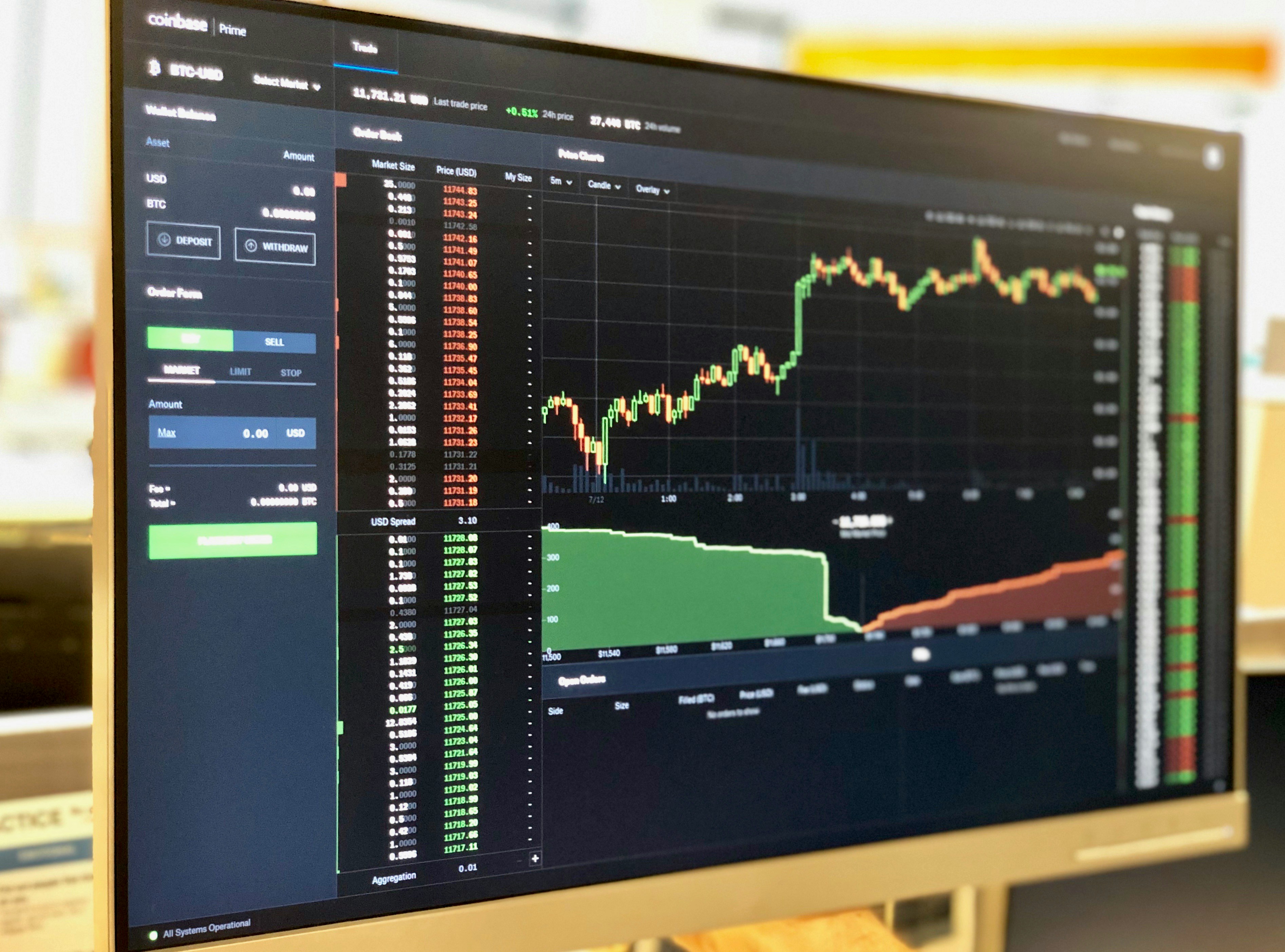
Overview of Today’s Market Trends
Today’s financial markets exhibited a significant correction, particularly within the cryptocurrency sector, which has been notably volatile in recent weeks. The overall market capitalization of cryptocurrencies has declined by approximately 1.21%, bringing the total valuation down to around $3.74 trillion. This downturn can be attributed to a variety of contributing factors, predominantly influenced by recent communications from the Federal Reserve.
The Federal Reserve’s cautious signal regarding future interest rate adjustments has led to heightened uncertainty among investors. As the central bank emphasized the need for a careful approach to monetary policy, many market participants reacted by reallocating their investments, often retreating from riskier assets like cryptocurrencies. This shift in investor sentiment not only impacted the prices of digital assets but also reverberated throughout other financial markets, further deepening the correction.
Liquidity concerns and profit-taking behaviors are evident, as short-term traders have been quick to respond to the Fed’s stance. The fear of prolonged periods of high inflation and the potential impact of interest rate hikes have fostered a risk-averse atmosphere among investors. Consequently, the cryptocurrency market may be experiencing a cooling period as traders reassess their strategies amidst shifting conditions.
Moreover, the heightened volatility observed today seems to echo broader market anxieties surrounding economic indicators and policy directions. Alternative assets such as stablecoins and traditional fiat currencies have gained some traction, as investors seek refuge from unpredictability within the crypto landscape. The overall market dynamics indicate that as investor sentiment fluctuates, the trends witnessed in today’s market may serve as a precursor for the coming weeks, reflecting an ongoing tug-of-war between risk appetite and economic caution.
Impact of the Federal Reserve’s Meeting
The recent meeting of the U.S. Federal Reserve has generated significant attention among investors and market analysts alike. Central to the discussion was the cautious tone adopted by the Fed regarding future monetary policy, which appears to have cultivated a more uncertain landscape for market participants. The Federal Reserve has historically played a pivotal role in guiding economic expectations, and its latest statements seem to have contributed to a notable decline in market confidence. This can be largely attributed to the nuances in their communications that hint at a potential tightening of monetary conditions, which could have far-reaching effects on both equity and fixed-income markets.
One of the key takeaways from the meeting was the Fed’s acknowledgment of ongoing economic challenges, including inflationary pressures and sluggish consumer spending. These factors prompted an urgent reassessment of their previous strategies, particularly as they pertain to interest rate hikes and asset purchasing programs. The implications of this reassessment have been palpable, as investors have begun to alter their expectations, leading to increased volatility in stock prices. Moreover, the Fed made it clear that while they remain committed to supporting economic recovery, they are equally vigilant about potential risks, signaling a more cautious approach moving forward.
Additionally, the Federal Reserve’s messaging has resulted in a shift in investment strategies among market participants. As uncertainty looms, many investors are gravitating towards safer assets, reflecting a broader trend of risk aversion. This behavior underscores the delicate balance the Fed must maintain between encouraging economic growth and managing inflation, highlighting the complexities of its decision-making process in the current environment. Ultimately, the Fed’s cautious signals may have set the stage for a more unpredictable market landscape, compelling investors to remain vigilant and adaptable in their strategies as they navigate this evolving scenario.
Analysis of Key Resistance Levels and Market Reactions
In the realm of cryptocurrency, key resistance levels often serve as pivotal points that can dictate market trends and trading behaviors. Recently, Bitcoin has found itself grappling with the significant resistance level at $115,000. This threshold represents not only a psychological barrier but also a critical technical level for traders and investors. The failure to breach this mark has led to a notable shift in market sentiment, triggering profit-taking strategies among market participants. As traders reacted to the stagnation, a sell-off ensued, contributing to the overall downturn observed in today’s market.
The struggle to surpass the $115,000 resistance level has implications that extend beyond Bitcoin itself, affecting the broader cryptocurrency ecosystem. A breakout above this level could have signaled increased confidence among investors and potentially attracted new capital to the market. Conversely, the inability to achieve this milestone may have reinforced bearish sentiments, resulting in a cascade of sell orders. This dynamic exemplifies how resistance can influence trading decisions, as market participants often look to previous highs and resistance points to inform their strategies.
Moreover, other prominent cryptocurrencies have mirrored Bitcoin’s struggles, experiencing their own reactions to the fallout. Ethereum, for instance, faced pressure as it approached its own key resistance levels, leading to a decline in value. Similarly, XRP and Cardano exhibited signs of fatigue as traders opted for profit-taking amid the broader market correction. These interrelated movements underscore the interconnectedness of the cryptocurrency markets, with Bitcoin’s resistance levels significantly affecting the price action and trader sentiment across various platforms.
Ultimately, the failure to decisively breach key resistance levels not only shapes individual trading strategies but also impacts overall market dynamics, allowing for potential opportunities and risks that traders must navigate in an increasingly volatile environment.
Future Outlook: Navigating Market Uncertainty
The recent sharp correction in the markets following the Federal Reserve’s cautious signal has sent ripples throughout various investment sectors. Investors and traders now face the daunting task of navigating this environment of uncertainty. As traditional markets react to the Fed’s stance, indications suggest that volatility may persist in both equities and cryptocurrency markets. The cautious sentiment expressed by the Fed can be interpreted as a warning, prompting many to reassess their investment strategies and risk tolerance levels.
Within the traditional markets, analysts foresee a potential slowdown in growth driven by tightening monetary policies aimed at combating inflation. This may lead to further corrections and adjustments as companies attempt to align their growth projections with an increasingly stringent economic environment. Investors should remain vigilant, monitoring financial indicators such as interest rates and employment data, which significantly influence market health. Additionally, diversifying portfolios to include defensive stocks or sectors—those that historically perform well in downturns—can provide a buffer during turbulent times.
In the cryptocurrency realm, the caution permeating traditional markets is also spilling over into digital assets. As regulatory frameworks evolve and crypto’s legitimacy grows, traders must remain aware of fundamental developments that could impact coin valuations. Understanding macroeconomic trends and their effects on investor sentiment is crucial when making decisions in this highly volatile space. Experts suggest that those holding cryptocurrencies may need to adopt a long-term perspective, positioning themselves to weather short-term fluctuations while aiming for potential recovery in the future.
Ultimately, navigating this market uncertainty requires a balanced approach that blends cautious optimism with strategic investment choices. By keeping abreast of market developments and expert analyses, investors can better position themselves to capitalize on opportunities as they arise while minimizing the risks associated with ongoing market volatility.