
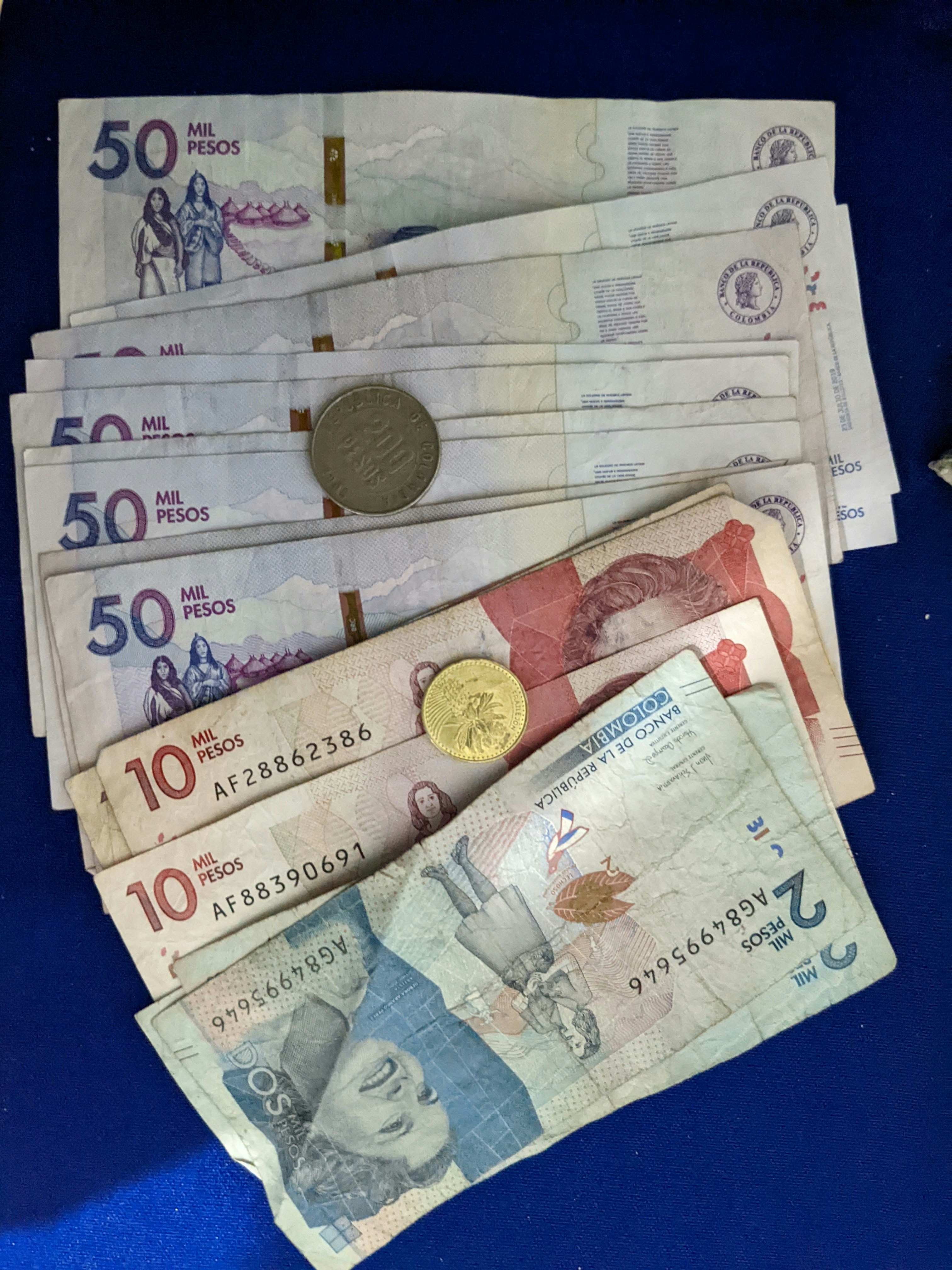
Introduction to the Colombian Peso
The Colombian Peso, abbreviated as COP, serves as the official currency of Colombia. Its symbol, the dollar sign ($), can occasionally lead to confusion due to its shared representation with several currencies worldwide. However, it is important to note that the Colombian Peso is distinct in its denomination and use within the Colombian economy. Originally introduced in 1810, the peso has undergone numerous transformations, significantly shaped by Colombia’s historical and economic changes.
The Colombian Peso plays a crucial role in facilitating trade, commerce, and everyday transactions in Colombia, underpinning the financial activities of both individuals and businesses. As a fiat currency, its value is not backed by physical commodities but instead derives credibility from the trust of the public and the Colombian government. The Central Bank of Colombia, known as Banco de la República, is responsible for issuing and regulating the currency, ensuring economic stability and growth through monetary policy and management of inflation.
Within the Peso’s structure, the smallest denomination is the centavo, which is worth one-hundredth of a peso. Although centavos are technically a part of the currency system, it is noteworthy that they have largely fallen out of circulation due to inflation and practical usage constraints. As a result, transactions typically round to the nearest peso, making the centavos more theoretical than practical in everyday economic dealings. Understanding these elements is essential for anyone looking to navigate the complexities of the Colombian financial landscape.
Historical Background
The Colombian Peso has a rich history that reflects the country’s socio-economic evolution over several centuries. During the Spanish colonial period, the currency in circulation was primarily the Spanish real, which served as a medium of exchange in the region. The real was widely used by merchants and indicated the early stages of monetary development in what is now Colombia. After Colombia gained independence in the early 19th century, the Colombian real became the legal tender, continuing the legacy of colonial currency but adapted to the emerging independent state.
In 1837, a pivotal moment in the monetary history of Colombia occurred with the establishment of the peso. The initial valuation of the peso was set at 2,000 reales, signifying a distinct shift from the old colonial standard. This transition aimed to create a more stable national currency that could support the growing nation and its economy. Over the following decades, the Colombian Peso underwent several changes, including modifications in its metallic content and the introduction of new coin denominations.
The adoption of the gold standard in the late 19th century was another significant development in the history of the peso. The gold standard allowed the peso to be pegged to the value of gold, which not only increased confidence in the currency but also facilitated international trade. However, the economic turmoil and political instability in the early 20th century led to challenges in maintaining this standard. In response to these difficulties, Colombia adapted its currency policies, including adjustments in the pegging of the peso to various foreign currencies, particularly the US dollar. This adaptability has been a crucial factor in navigating economic fluctuations and external influences over the years.
Currency Structure: Coins and Notes
The Colombian Peso (COP) serves as the official currency of Colombia and demonstrates a well-defined structure comprising both coins and banknotes. The peso is subdivided into smaller units known as centavos, with one peso equating to 100 centavos. This division allows for microtransactions and contributes to the currency’s utility in everyday trade. The centavos are available in various forms, typically as coins of 50, 100, 200, 500, and 1000 centavos, though it is noteworthy that the lowest denominations have gradually diminished in public circulation due to their low purchasing power.
The coins currently in circulation are characterized by their metallic composition, featuring a mix of nickel and brass in different proportions, enhancing durability while providing a clear distinction in terms of value. In recent years, the 1,000 centavos coin has been instrumental, representing the highest denomination in circulation and often used alongside banknotes in everyday transactions.
In terms of banknotes, the Colombian Peso features several denominations which facilitate various trading scenarios. Notes are issued in the following denominations: 1,000, 2,000, 5,000, 10,000, 20,000, 50,000, and the 100,000 peso note. Each banknote showcases images of notable Colombian figures, such as the renowned artist and writer Gabriel García Márquez. A significant change occurred in 2016 when the Central Bank of Colombia introduced a new series of banknotes aimed at modernizing the physical currency and enhancing anti-counterfeiting features. These updated banknotes incorporate advanced security measures, including watermarks and holographic elements, ensuring public confidence in their usage.
This transition not only reflects the adaptation of the Colombian Peso to contemporary requirements but also indicates a commitment by the Colombian government to protect its economy against forgery and to promote a sustainable fiscal environment.
Impact of Inflation on the Currency
The history of inflation in Colombia has had significant repercussions on the Colombian Peso, particularly during the intense economic fluctuations of the 1970s and 1980s. Inflation in this period reached alarming levels, peaking at over 30% annually. Such a situation eroded the purchasing power of the Peso, precipitating a series of changes in the country’s currency system. One major consequence of this rampant inflation was the cessation of centavo coin circulation in 1985. The centavo, which represented fractions of the Peso, became practically insignificant as prices soared, rendering these coins useless for most daily transactions.
The impact of inflation extended beyond just the physical coins; it significantly altered how the Colombian populace interacted with the currency. With hyperinflation, consumers found themselves carrying large amounts of money to engage in basic purchases. For instance, the price of everyday goods frequently escalated, forcing sellers to adjust their prices multiple times a day. This scenario fostered a culture where consumers began to prioritize immediate spending over saving, as savings would quickly lose value. Such behavior further fueled inflation, creating a vicious cycle that impacted the economy holistically.
Exchange Rate Dynamics
The historical exchange rate of the Colombian Peso (COP) against the US Dollar (USD) has exhibited significant fluctuations since the early 1990s, reflecting both internal and external economic factors. In the early 1990s, the Colombian economy faced numerous challenges, including hyperinflation and political instability, which contributed to a depreciation of the peso. At this time, the exchange rate was relatively stable, hovering around 1,200 COP per USD. However, as the country began implementing economic reforms and liberalizing its markets, the peso experienced considerable volatility.
By the late 1990s, the Colombian peso dropped sharply due to a combination of economic recession and declining coffee prices, which is one of the country’s key exports. By 1999, the exchange rate reached a staggering 2,200 COP per USD as investors began to lose confidence in the economy. The situation stabilized in the early 2000s, supported by increased foreign investment and a positive shift in commodity prices, allowing the peso to appreciate gradually against the dollar, reflecting an exchange rate of about 2,100 COP per USD by 2005.
Entering the 2010s, Colombia’s improved economic performance, characterized by robust growth and effective monetary policies implemented by the Colombian Central Bank, bolstered the peso. The exchange rate fluctuated between 1,900 and 2,300 COP per USD over this period. However, external shocks, such as declining oil prices in 2015, significantly impacted the peso’s value, which led to another depreciation, reaching nearly 3,500 COP per USD by 2016. Since then, the exchange rate dynamics have remained sensitive to global economic trends, fluctuations in commodity prices, and local political events, showcasing the intricate relationship between the Colombian Peso and the US Dollar throughout its history.
The Proposal for Redenomination
The concept of redenomination in Colombia has garnered significant attention, particularly the proposal to change the value of the Colombian peso by converting 1,000 pesos to 1 new peso. This initiative is not merely a cosmetic alteration; it aims to address deeper economic concerns, notably inflation and the stability of the national currency. Over the years, Colombia has experienced varying degrees of inflation, which has undermined public confidence in the peso and complicated everyday transactions for citizens.
The historical context of this proposal can be traced back to earlier attempts to stabilize the currency. Various administrations have contemplated similar measures as a means to streamline the monetary system and enhance public perception of currency strength. Key figures in these discussions have included economists, policymakers, and members of the financial community who present both supportive and opposing views about the effectiveness of such a move. Prominent economists suggest that redenomination could simplify financial transactions and reduce the burden of carrying large amounts of cash, especially in a country where informal markets thrive.
On the other hand, there is significant opposition rooted in concerns about the implementation and potential ramifications of redenomination. Critics argue that changing the currency without addressing underlying issues such as inflation control and fiscal policy may simply result in temporary relief. Moreover, there is anxiety that the appearance of stability may not translate into actual improvements for the average citizen. The debate is further complicated by the potential psychological effects the change could entail, with some segments of society viewing redenomination as a signal of economic failure rather than progress.
Ultimately, the proposal for currency redenomination remains a contentious topic. While it offers a theoretical framework for simplification and restoration of confidence, the practical implications and the historical precedents of such monetary reforms must be carefully considered. The discussion about redenomination continues to shape the ongoing narrative about the Colombian peso in both the national and international arenas.
Banking and Electronic Transactions
In contemporary Colombia, banking practices and electronic transactions play an essential role in the economy, particularly given the structure of the Colombian Peso. The currency, composed of 100 centavos to 1 peso, creates a unique dynamic in both cash and electronic transactions. While cash remains a common method of payment, the rise of electronic banking has introduced new efficiencies and conveniences that are changing consumer behavior across the nation.
Cash transactions, although still prevalent, are increasingly complemented by digital options. A substantial part of the population continues to rely on physical currency for everyday purchases due to the cultural familiarity and the immediate nature of cash payments. However, the purchasing power of centavos, which may seem minuscule, is an important aspect of this currency structure. Many Colombians find it common to handle small denominations, promoting a culture that actively engages with coins despite their lower value.
On the other hand, electronic banking has gained momentum, offering advantages such as speed, security, and convenience. Mobile banking applications and online platforms have streamlined how individuals and businesses conduct transactions, from paying bills to transferring funds. This shift is significant, considering the extensive reach of mobile technology in Colombia. With a growing number of citizens having access to smartphones, the integration of electronic payment systems has made it easier for consumers to move away from cash-dependent practices.
The contrasting approaches to transactions—cash versus electronic—reflect a transitional phase in Colombian financial habits. While cash continues to hold its ground, the demand for electronic banking solutions is driving innovation in the sector. As the Colombian economy evolves, it is likely that we will see a gradual increase in the adoption of electronic transactions, reshaping the landscape of monetary exchanges in the country.
Public Perception and Cultural Significance
The Colombian Peso holds a unique place in the hearts and minds of Colombian citizens, reflecting not only the nation’s economic climate but also its rich history. Over the years, the perception of the peso has evolved significantly, largely influenced by various socio-economic factors, including inflation, political stability, and global economic trends. For many Colombians, the peso symbolizes more than just a unit of currency; it encapsulates the struggles and triumphs of their nation.
Historically, the peso has experienced considerable fluctuations, particularly during periods of hyperinflation and economic instability. Such challenges have shaped public attitudes toward the currency, often leading to a lack of trust in its value. In the late 20th century, Colombia faced rampant inflation, which diminished the purchasing power of the peso, causing citizens to view it with skepticism. This feeling is often accompanied by a sense of nostalgia for stronger economic periods, causing a cultural attachment to moments in history when the peso was viewed as more stable.
Despite the challenges that accompany its value, the Colombian Peso continues to be a cherished symbol of national identity, representing resilience and the hope for a more stable economic future. Understanding its role in public perception offers valuable insights into both the cultural and economic landscape of Colombia today.
Conclusion and Future Prospects
In reviewing the historical context, unique features, and current standing of the Colombian Peso, it is clear that this currency has evolved significantly over time. The Peso has undergone various transformations since its inception, influenced by political, economic, and social factors. Understanding the Colombian Peso requires not only a look at its past but also an appreciation of its importance in the present-day economy of Colombia.
Considering the features of the Colombian Peso, such as its denominations and design elements, one can observe a reflection of the nation’s culture and heritage. These elements not only enhance the currency’s visual appeal but also serve as a reminder of Colombia’s rich history. The discussions surrounding the stability of the Peso highlight both the challenges and strengths within the Colombian economy. Economic indicators demonstrate fluctuating trends that can affect the currency’s performance on the international stage.
Looking ahead, the future prospects of the Colombian Peso seem contingent on several factors, including potential reforms in the currency system, shifts in global economic dynamics, and the country’s internal economic policies. Ongoing dialogues amongst policymakers suggest a proactive approach to addressing the challenges faced by the Peso. There is an increasing emphasis on enhancing economic stability, which could entail refining regulations and bolstering fiscal measures to ensure sustainable growth.
It is imperative for stakeholders, including investors and consumers, to monitor these developments closely. The interactions between Colombia’s political climate and its economic drivers will play a crucial role in shaping the future of the Colombian Peso. Ultimately, a comprehensive understanding of these dynamics will be essential for navigating the potential changes and their impacts within both domestic and international contexts.
You might also like:
- Sports Highlights: October 20, 2025
- US Stock Market Update: Major Indexes Decline Under Pressure from Technology Stocks
- Market Recap: Positive Close for Major Indices on October 17th
- Tragedy at Brown University: A Detailed Look at the December 14, 2025 Shooting
- Global Observances on December 14, 2025: Hanukkah Celebrations and Chernobyl Liquidators Day