
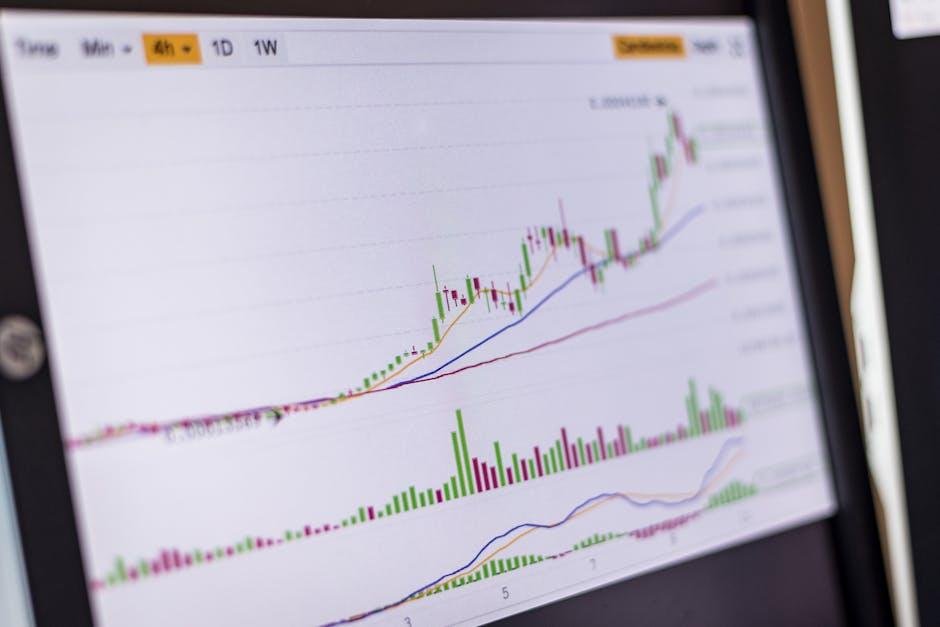
Bitcoin Dips Under $66K: How Rising oil Prices Are Heightening US Inflation Risks
Financial markets are currently navigating a turbulent landscape. Recently, Bitcoin, the world’s leading digital asset, faced notable selling pressure, dipping below the psychologically crucial $66,000 threshold. While market analysts frequently point too various external factors, the primary driver for this volatility appears to be a resurgence in energy costs. The recent spike in global oil prices has reignited fears of “unsustainable” US inflation, forcing investors to recalibrate their risk profiles in both conventional and cryptocurrency markets.
In this article, we will examine the intricate relationship between oil, the US economy, and Bitcoin’s price performance. Understanding these macroeconomic levers is essential for any modern investor looking to navigate digital asset portfolios during uncertain economic times.
The Oil-Inflation Connection: A Macro Perspective
Energy is a core component of the global supply chain. When the price of oil increases, it ripples through every layer of the economy-impacting transport costs, manufacturing, and ultimately, consumer prices for goods and services. When oil prices remain persistently high, the risk of “unsustainable” inflation increases, often forcing central banks to maintain higher interest rates to combat rising costs.
For speculative assets like Bitcoin, high interest rates and persistent inflation are frequently enough viewed as a “double-edged sword.” On one hand, Bitcoin is marketed as a “digital gold” or a hedge against fiat currency debasement. On the other hand, in the short term, Bitcoin is highly sensitive to liquidity conditions. If high inflation leads to restrictive monetary policies, investors frequently enough pull liquidity out of riskier assets, leading to price dips like the one recently observed under $66K.
Bitcoin Under Pressure: Why the $66K Level Matters
The $66,000 mark has acted as a critical support zone for Bitcoin traders. Technical analysts frequently enough focus on these round numbers as psychological barriers. When Bitcoin falls below this level, it triggers a cascade of automated sell orders and liquidated leveraged positions, accelerating the downward trend.
Key Factors Influencing Recent Volatility:
- Macroeconomic Uncertainty: Persistent inflation data (CPI/PCE) continues to sway market sentiment away from risky assets.
- Geopolitical Tensions: Conflict-driven spikes in crude oil prices act as an inflationary catalyst.
- Liquidity Droughts: As capital becomes more expensive, institutional investors reallocate funds toward “safer” interest-bearing instruments.
- Market Sentiment: The intersection of crypto-native events-such as exchange vulnerabilities or technical security considerations-can exacerbate market reactions. For example, understanding how different security protocols, such as BIP39 mnemonics,protect your assets during market instability is vital for risk mitigation [[2]].
Market Comparison: Traditional Assets vs. Crypto
To help visualize how different assets have reacted to the inflationary habitat,we have put together a comparison table representing typical market behaviors during commodities-driven inflation spikes.
| Asset Class | Inflation Sensitivity | market Sentiment |
|---|---|---|
| Bitcoin | High (Short-term) | Volatile/Risk-On |
| US Dollar (DXY) | moderate | Safe Haven |
| Crude Oil | Direct Driver | Bullish (Cost-Push) |
| Gold | Low-Moderate | Defensive |
Practical Tips for Investors During Market Dips
When the market turns red and news about inflation and oil prices dominates the headlines
You might also like:
- Funny Humor: Must-Have Jokes for Everyday Laughs
- Toy Myth 5: Exploring The Conception That “When Tech Comes In, It Wins”
- Jets rep solid 40% odds of 1 of two draft steals at WR to fall to 16th pick
- Air Canada CEO to resign after backlash to video tribute of pilots killed in wreck
- rnboi – j’pense à toi : Artiste à Suivre en 2026
