
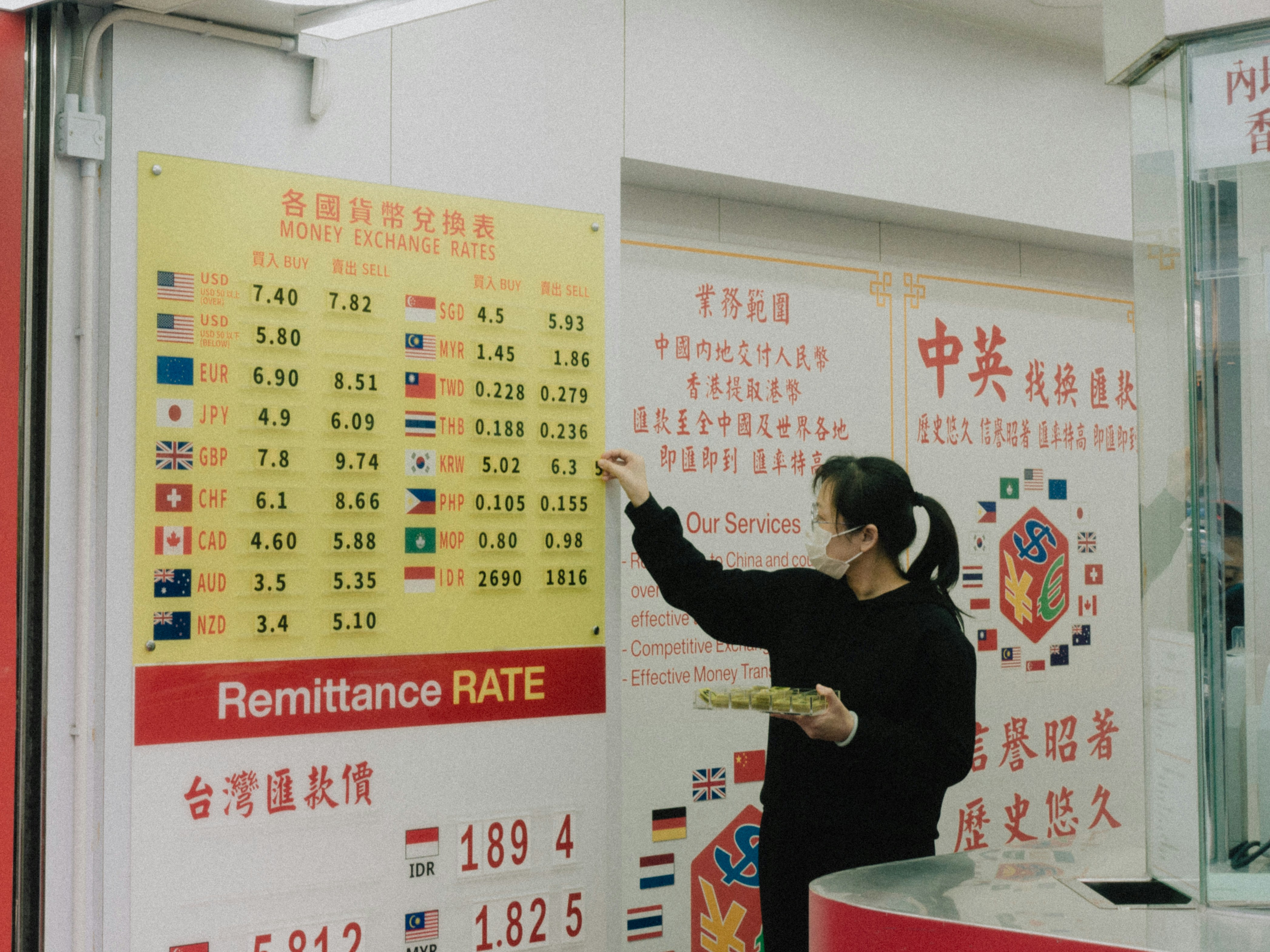
The Dollar’s Decline: Understanding Trump’s Influence
Since the beginning of 2025, the value of the US dollar has experienced notable fluctuations, largely influenced by the policies and rhetoric of President Trump. His public statements, particularly those regarding the strength of the dollar, have led to significant market reactions. One pivotal moment occurred when Trump asserted that the dollar was ‘doing great,’ which was perceived as a paradox given the subsequent decline in its value.
Trump’s economic approach has often emphasized the importance of competitiveness in international trade. In this context, he suggested that allowing the dollar to ‘seek its own level’ might be beneficial for American exports. This idea posits that a weaker dollar can make US goods more affordable for foreign buyers, potentially boosting export-driven sectors of the economy. However, the downside of a depreciating dollar includes increased costs for imports, which can, in turn, lead to inflationary pressures within the domestic market.
The implications of a weaker dollar extend beyond mere economic metrics; investor sentiment plays a critical role. As the dollar weakened, concerns emerged regarding the stability of investments tied to currency valuations. Foreign investors might shy away from US assets, perceiving heightened risks associated with currency depreciation. This situation has prompted a reevaluation of portfolios, leading investors to consider alternative currencies or assets that can hedge against the declining dollar.
In summary, President Trump’s influence on the dollar’s decline highlights the interconnectedness of fiscal policy, market psychology, and economic fundamentals. Understanding this dynamic is essential for investors who are navigating the complexities of managing their portfolios in a changing currency landscape.
Impact on Corporate Earnings: The Quality Conundrum
The depreciation of the dollar has significant ramifications for the corporate earnings of U.S. multinationals. As companies operating in sectors such as technology, pharmaceuticals, and consumer goods earn a substantial portion of their revenue from international markets, a weaker dollar can lead to favorable currency translation effects. When foreign currency revenues are converted back to U.S. dollars, the resulting figures appear inflated, enhancing the reported earnings of these corporations. However, while this may initially suggest robust financial health, there is growing concern among investors regarding the sustainability and quality of these earnings.
Investor skepticism largely stems from the recognition that the earnings uplift, driven by currency fluctuations rather than genuine business growth, may not be reliable in the long term. In particular, the technology sector is vulnerable, as tech firms often engage in global sales but still face competition from local companies in foreign markets, which can erode profit margins. Similarly, pharmaceutical companies, while benefitting from a weaker dollar, must navigate the complex landscape of regulatory environments and pricing challenges, which can also diminish profit quality.
Moreover, gains associated with currency depreciation can be considered transient. If the dollar strengthens again, the inflated earnings due to prior currency advantages could be reversed swiftly, leading to potentially disappointing financial results and investor disillusionment. Analysts often express concern that reported earnings under these circumstances do not accurately reflect the underlying operational performance of companies, pointing to the need for a critical examination of the quality of these earnings. Indeed, investors may discount the inflated earnings figures, factoring in the potential volatility and unpredictability stemming from currency-driven gains. Safeguarding investment portfolios may thus require scrutiny of how much of the apparent growth is sustainable versus how much is simply a product of favorable currency shifts.
Currency Risk for Foreign Investors: Hidden Taxes on Returns
The depreciation of the dollar under the Trump administration has introduced significant changes for foreign investors in U.S. equities. As the dollar weakens, these investors face dual challenges: the inherent volatility associated with equity markets and the additional currency risk that complicates the investment landscape. This dual exposure can be viewed as a hidden tax on returns, wherein the revaluation of currency negatively impacts net gains when foreign currencies are exchanged back to home currencies.
For foreign investors, investing in U.S. stocks traditionally offered the allure of robust market performance and favorable returns. However, with the current trend of a weaker dollar, these potential returns must now be measured against the risks associated with currency fluctuations. When the dollar loses value, it effectively means that international buyers will receive fewer dollars for each investment they sell, eroding their overall returns. This scenario is especially pronounced in countries where their local currencies appreciate against the dollar, thereby amplifying the losses further.
Subsequently, foreign investors are reassessing their strategies in navigating the complexities introduced by currency risk. Some are opting to hedge their currency exposure through various financial instruments, while others are diversifying their portfolios to include assets denominated in various currencies to mitigate systemic risks associated with dollar depreciation. Additionally, there is a growing number of non-U.S. corporations that have increasingly begun to consider the currency risk in their financial planning, leading to adjustments in investment approaches.
Understanding the dynamics of currency risk is essential for foreign investors to accurately gauge the true performance of their U.S. equity investments. Adjusting investment strategies not only helps in shielding their returns from market shocks but also fosters a more resilient investment framework amidst an ever-evolving global financial environment.
Navigating the Volatile Market: Strategies for Investors
The current economic environment, influenced by a weaker dollar under the Trump administration, presents unique challenges and opportunities for investors. In such a volatile market, it is imperative for equity investors to adopt strategies that will not only safeguard their investments but also position them for potential growth. The first strategy involves evaluating corporate earnings with an emphasis on quality over quantity. Investors should seek companies with strong fundamentals, consistent cash flow, and the ability to maintain or grow profit margins even in adverse conditions. This focus can help investors navigate periods of downward pressure on earnings associated with currency fluctuations.
Diversification remains a vital tactic to mitigate currency risk. By spreading investments across various asset classes, industries, and geographical locations, investors can reduce the impact of a weaker dollar on their portfolios. This approach diminishes the likelihood of significant losses stemming from currency exchange fluctuations. For example, sectors such as technology and consumer staples often demonstrate resilience during economic uncertainty and might offer a hedge against the risks associated with currency devaluation.
Another consideration is the exploration of investment vehicles that capitalize on the weaker dollar. Commodities, particularly precious metals like gold, historically serve as safe havens during times of economic stress and currency weakness. Additionally, foreign investments can also be considered, as international companies may experience a boost in valuation as their revenues convert favorably back into dollars. Specific sectors, including export-oriented industries, may provide excellent opportunities for growth as they can benefit from the cheaper dollar value boosting their international competitiveness.
Investors should closely monitor market indicators and remain adaptable, ready to modify their strategies as the financial landscape evolves. By focusing on quality earnings, diversifying portfolios, and exploring resilient sectors, investors can effectively navigate the challenges posed by a weaker dollar, while positioning themselves for long-term success.
You might also like:
- Tragic Discovery: Canadian Couple Found Dead While Vacationing in Dominican Republic
- Understanding Economic Traps and Financial Bubbles: A Comprehensive Guide
- Bonding Over Shared Values: Ahmed Al-Ahmed Meets Jewish Leaders in NYC
- Tesla Transforms into a Mobile Gaming Console: A New Era of Electric Cars
- Science Finally Has a Upright Belief about Why We Utter
