
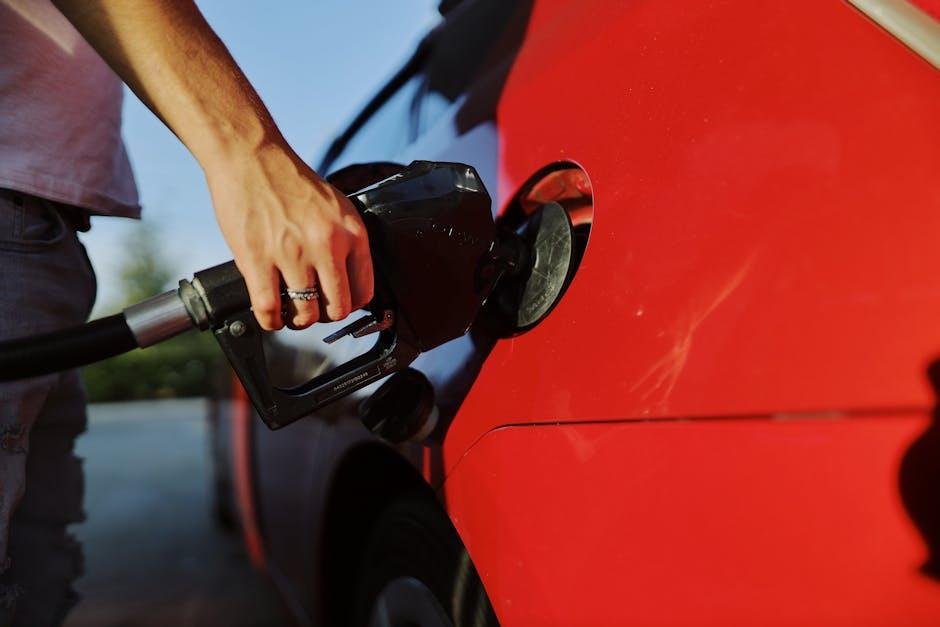
Trump Official Opens Door to Gas Tax Suspension: What You Need to Know
The cost of filling up at the pump remains one of the most immediate financial pressures on American households. As energy policies shift and political debates heat up, news regarding potential relief-such as a gas tax suspension-often captures headlines and sparks intense public discourse. Recently, reports surfaced via Axios indicating that a Trump administration official has opened the door to the possibility of a federal gas tax suspension.
For the average driver,this sounds like a potential lifeline. However, the economic reality behind changing fuel taxes is complex, involving infrastructure funding, supply chain dynamics, and long-term fiscal policy. In this deep dive, we will explore what a gas tax suspension means, the arguments for and against such a move, and how it might impact your daily commute and budget.
Understanding the Federal Gas Tax
Before diving into the political proposals, it is essential to understand what the federal gas tax actually is.Currently, the federal government levies an excise tax on motor fuel-18.4 cents per gallon for gasoline and 24.4 cents per gallon for diesel. This revenue is primarily funneled into the Highway Trust Fund, which finances road construction, public transit projects, and infrastructure maintenance across the United States.
When an official suggests a “suspension,” they are effectively proposing a temporary halt to the collection of this tax. The goal is simple: to provide immediate relief to consumers by lowering the retail price of gasoline.
The Case for Suspension: Relieving Consumer Burden
Proponents of a gas tax holiday argue that in times of high inflation or economic strain, every cent counts. By removing the federal levy, the government can effectively lower the cost of fuel overnight.
Key Benefits of a Gas Tax Holiday
* Immediate Purchasing Power: Lower gas prices mean more disposable income for families to spend on groceries, utilities, and debt repayment.
* Reduced Inflationary Pressure: As fuel prices affect the cost of trucking and shipping, a drop in gas prices can theoretically lower the transportation costs of consumer goods, potentially slowing inflation.
* Political Goodwill: A visible reduction in pump prices is a direct way for policymakers to signal that they are addressing the cost-of-living crisis.
| Benefit Category | Direct Impact |
|---|---|
| Family Budget | Higher monthly savings potential. |
| Transportation Costs | Lower shipping overhead for retailers. |
| Commuter Relief | Cheaper daily travel costs. |
The Opposition: Why Skeptics Are Concerned
While the idea of cheaper gas is universally appealing at a glance, economists and infrastructure experts frequently enough raise significant red flags. The primary concern is the sustainability of the Highway Trust Fund.
if the federal gas tax is suspended, the funding for critical infrastructure projects-bridges, highways, and public transit-must come from elsewhere. If it isn’t replaced, these projects face delays, underfunding, or cancellation, which leads to long-term economic degradation.
why Critics Urge Caution
* Market Volatility: Critics argue that fuel prices are driven by global oil markets. Without a guarantee that retailers will pass the savings onto consumers, the tax cut might simply increase profit margins for oil companies rather than lowering prices at the pump.
* Revenue Loss: The Highway Trust Fund relies specifically on these tax revenues. A suspension creates a “hole” in the budget that may require deficit spending to fill.
* Infrastructure Decay: Delaying road maintenance often leads to costlier repairs down the road, creating a false economy for the taxpayer.
Analyzing the Axios Report: The Political Context
The report regarding a Trump-era official signaling support for this policy highlights a familiar trend: the search for “populist” energy solutions. Throughout his political career, Donald Trump has frequently championed energy independence and lower costs for consumers. Openly discussing a gas tax suspension signals a willingness to bypass conventional fiscal caution in favor of direct relief measures.
However, policy proposals in the heat of a political cycle often serve dual purposes: they offer a potential solution to a hot-button issue (gas prices) while providing a talking point that resonates with a broad base of voters who feel the pinch at the filling station.
Practical Tips for Managing Fuel Costs
Since a federal gas tax suspension remains a proposal rather than a current reality, drivers continue to face the burden of fluctuating fuel prices.Regardless of political developments, you can take control of your fuel consumption with these practical habits:
- Maintain Your Vehicle: A poorly tuned engine is less fuel-efficient. Regular oil changes, air filter replacements, and checking your tire pressure can improve gas mileage by several percentage points.
- Optimize Your Route: Use navigation apps to avoid traffic jams. constant stop-and-go driving burns significantly more fuel than highway driving at constant speeds.
- Use Fuel Rewards Programs: Many gas stations offer loyalty apps or credit card rewards that provide cents off per gallon. Over a year, this adds up to ample savings.
- Adopt Smooth Driving Habits: Jackrabbit starts and sudden stops are
You might also like:
- Bigger and greater: Ladies’s Final Four groups crammed with multi-talented frontcourt avid gamers
- Steve Rosenberg: This yr’s Victory Day parade in Moscow felt very varied – BBC
- Addressing the Homelessness Crisis in Los Angeles: A Discussion on December 12, 2025
- NASCAR world pays an emotional tribute to Kyle Busch sooner than Coca-Cola 600 – The Original York Instances
- We at closing know when Samsung Messages is going away for honest correct
