
Overview of U.S. Arms Transfer Policy
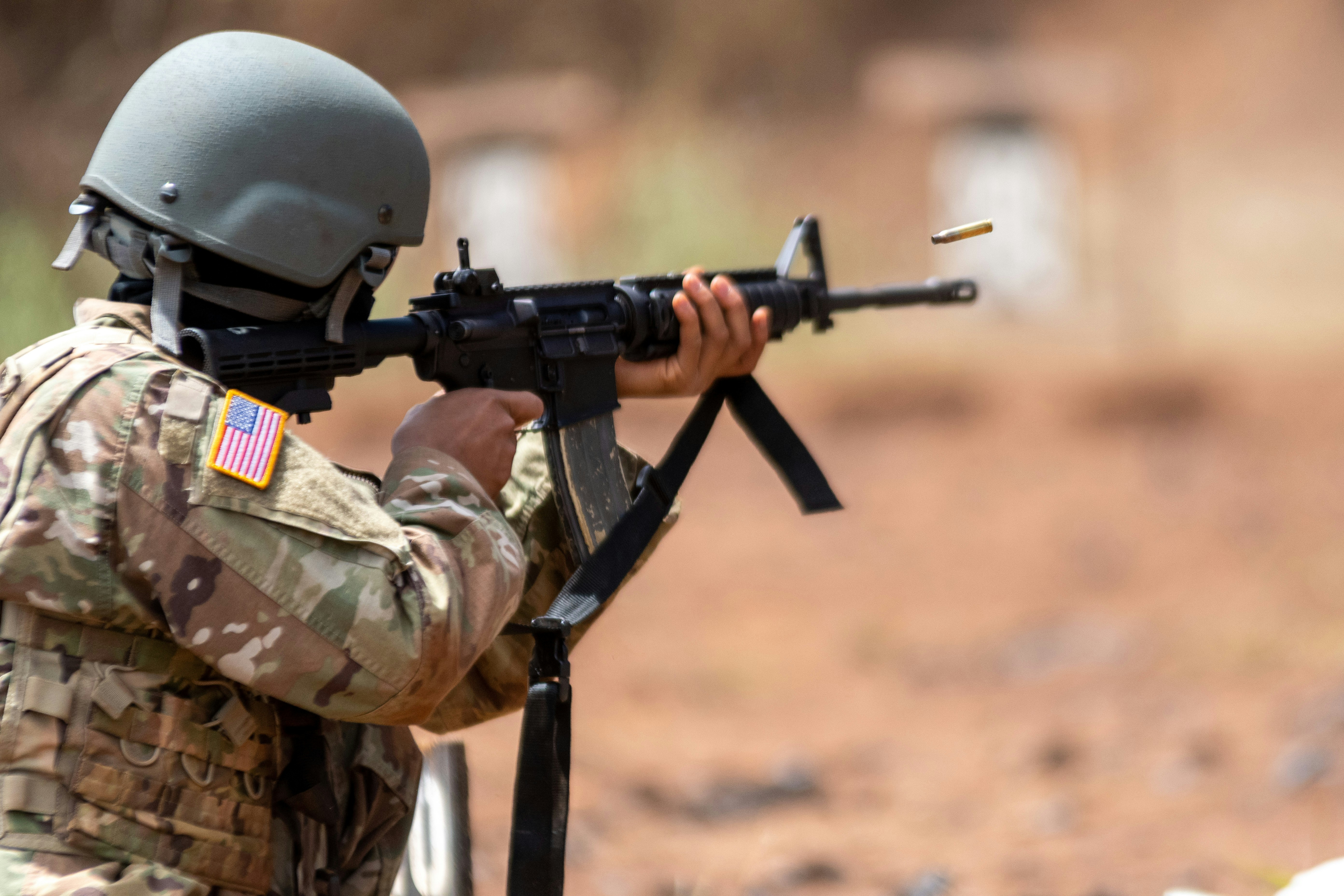
The U.S. arms transfer policy has undergone significant evolution in recent years, particularly under the administration led by President Trump. Central to this strategy is the ‘America First Arms Transfer Strategy,’ introduced through an executive order in February 2026. This policy framework has been designed with multiple objectives that intertwine national security with economic interests. Most notably, it aims to use arms sales as a pivotal foreign policy tool, facilitating the strengthening of international partnerships while simultaneously bolstering the U.S. defense industrial base.
One of the key elements of this strategy is the discernible shift in the selection of partners across specific geographical regions. The U.S. has strategically aimed to prioritize arms transfers to allies that align with its geopolitical interests, particularly in strategic locales where balance of power dynamics are at play. By emphasizing arms sales, the administration seeks to foster stronger military partnerships, ensuring that the U.S. remains at the forefront of global defense collaborations.
This arms transfer policy does not merely revolve around economic benefit; it also serves as a crucial mechanism to enhance U.S. influence on the global stage. The implications of this policy framework extend beyond mere transactions; they encompass the formation of military engagements and alliances that can potentially reshape regional security architectures. As a result, U.S. arms sales have become an integral part of the broader foreign policy approach, reflecting a commitment to assertive diplomacy backed by defense capabilities.
In summary, the changes introduced under the ‘America First Arms Transfer Strategy’ reflect a comprehensive approach towards arms transfers, aiming to optimize defense relations globally while supporting the domestic defense sector. The ongoing implications of this policy will likely continue to play a significant role in U.S. interactions with other nations and the maintenance of international order.
China’s Response to U.S. Arms Sales
China has historically expressed strong opposition to arms sales by the U.S., particularly those directed toward Taiwan. This resistance stems from several foundational principles guiding China’s foreign policy, primarily concerning national sovereignty and territorial integrity. For China, the sales of military equipment to Taiwan are seen as direct challenges to its claim over the island, which it regards as a breakaway province. The Chinese government argues that such actions violate international agreements concerning the One China policy, a principle that has been acknowledged by many nations worldwide.
In recent years, U.S. arms sales have intensified, prompting China to issue firm diplomatic criticisms and assert its position on sovereignty. The Chinese leadership perceives these sales not only as a violation of existing accords but also as deliberate provocations from the U.S. aimed at undermining China’s geopolitical standing in the region. The deployment of advanced weaponry in Taiwan is interpreted as a strategy to bolster anti-China sentiments among local populations, further complicating the dynamics surrounding cross-strait relations.
China’s diplomatic strategy involves leveraging its opposition to U.S. arms deals as a means of solidifying its domestic support and rallying international allies against what it considers coercive foreign interference. Beijing has consistently articulated that any U.S. military support for Taiwan could incur severe repercussions, with threats of military responses or escalated tensions in the Taiwan Strait. The increasing military posturing from China reflects its determination to safeguard its national interests and send a clear signal regarding the limits of U.S. influence in the Asia-Pacific region, highlighting the broader implications of arms sales on international relations.
Impact on Diplomatic Relations and Presidential Visits
The dynamics of arms sales between the United States and China play a significant role in shaping diplomatic relations. High-level interactions, including a potential presidential visit to China, can be severely affected by U.S. arms sales. Such transactions are often perceived by China as hostile actions, particularly when they involve military support for Taiwan, which Beijing regards as an integral part of its territory.
When the U.S. engages in arms sales that China views as violations of its core interests, it can lead to a breakdown of trust and hinder goodwill between the two nations. The scale and implications of arms deals can invoke strong diplomatic responses from China, potentially influencing the feasibility of planned presidential visits. The Chinese government may choose to respond by downgrading diplomatic exchanges or altering the agenda of high-profile meetings to signal its discontent.
Historically, instances of U.S. arms sales to Taiwan have prompted China to reconsider its diplomatic strategies. Each time significant military support was provided to Taiwan, China reacted by scaling back interactions with U.S. officials or denying access to key diplomatic events. These responses underscore how arms sales can directly affect the collaborative environment necessary for productive dialogue between the two superpowers. A presidential visit, often viewed as an opportunity to bolster bilateral relations and mutual trust, can be jeopardized if arms sales are perceived as provocative. This complex interplay illustrates the delicate balance that must be maintained in foreign policy decisions affecting arms sales and, consequently, diplomatic relations with China.
Broader Implications and Future Observations
The ongoing U.S.-China dynamics surrounding arms sales and sovereignty issues are pivotal not only for the two nations involved but also for the global geopolitical landscape. As tensions rise, the international community must pay close attention to several key areas. Official statements from both the U.S. and China will likely provide insight into their respective strategies and responses. Each pronouncement can serve as a signal of escalating or de-escalating tensions, which will influence both regional and global market behaviors.
In addition to verbal exchanges, potential countermeasures from China, such as sanctions or enhanced military capabilities, must be closely monitored. Historically, China has taken assertive steps in response to perceived threats from U.S. policies, particularly concerning arms sales to Taiwan. These counteractions have the potential to further inflame the situation and draw in neighboring countries, thus altering the balance of power in the region.
The reactions of regional markets will significantly reflect the prevailing sentiments around U.S.-China relations. Economic indicators, trade agreements, and investment flows may shift in response to changes in arms sales policies or diplomatic overtures. Observers should keep an eye on not only financial markets but also on defense sector responses, as companies may alter their strategies in anticipation of lower or higher defense spending from governments affected by U.S.-China relations.
Ultimately, the implications of the U.S.-China clash extend beyond immediate political standoffs. The potential for increased tension raises concerns regarding global political stability and international cooperation. Future U.S.-China diplomacy will be critical in mitigating these risks. While the path ahead remains uncertain, the dynamics surrounding arms sales may serve as a crucial barometer for assessing the overall health of bilateral relations.
You might also like:
- Google accounts no longer find 15GB of free storage, easiest 5GB till you link a mobile phone number – 9to5Google
- Understanding Disinflation vs. Deflation: Economic Implications
- Macron’s Warning: Potential EU Tariffs on Chinese Goods and Its Implications
- Impress predictions 5/18: SPX, DXY, BTC, ETH, XRP, BNB, SOL, DOGE, HYPE, ADA
- Why Are Gold Prices Soaring?
